Thursday, August 17, 2006

An Intersection of Sorts

Lately I have been rereading some of Ranciere's The Philosopher and his Poor, specifically the interpretation of Plato's Republic. Ranciere underlines a very basic point, that the definition of justice that we get in Book IV (doing one's own work and not meddling) is a repetition of what was already stated in Book II as an essentially economic argument, that every person must dedicate him or herself to one job. "The image of justice is the division of labor that already organizes the healthy city." Thus, a political principle (that of justice) rests on what is taken as a social fact, the division of labor.

Ranciere's argument actually goes a step further, to point out that what supports the social fact is a particular understanding of time. "The Platonic statement, affirming that the workers had no time to do two things at the same time, had to be taken as a definition of the worker in terms of the distribution of the sensible: the worker is he who has no time to do anything but his own work." It is not that political distinctions rest ultimately on social distinctions, as superstructure on base, but that both rest on a particular structure of experience, what Ranciere calls the distribution of the sensible. The distribution of the sensible, "the system of self-evident facts of sense perception that simultaneously discloses the existence of something in common and the delimitations that define the respective parts and positions within it," is what links the social and the political, naturalizing them both.

In the work of Etienne Balibar, the concept which does the same work, bringing together and naturalizing the political order and the social order is "anthropological difference."Balibar's conception of "anthropological difference" is not a return to pure speculation about the nature of man, as if the various critiques (feminist, post-colonial, post-structural, etc.) of this object had never taken place, but rather an investigation into the unstable, but unavoidable question, or image, of the human. "Anthropological difference" is a difference that fulfills two conditions: first, it is a necessary component of any definition of the human (such as language); and second, it invokes a division which can never finally be rigorously drawn. Examples of this would include sexual difference and the difference between sickness and health. In each case there is no division of humanity into men and women (or the healthy and the sick) without remainders, intersections, and identities that would ultimately need to be policed and patrolled. Balibar includes the division of mental and manual labor, or what he calls "intellectual difference", within this category. Humankind cannot be defined without the idea of thought (as Spinoza writes: "Man Thinks"), but this general definition is divided by the practices and institutions which determine and dictate the division between the "ignorant" and the "educated" or between "manual" and "mental" labor.

These concepts "distribution of the sensible" and "anthropological difference" are what I would call "meta-ideological." Ideological in that there is a reinforcing of the political order by the social order, and vice versa. "Meta" in that this takes place not through a set of concepts or a doctrine, in the sense of this or that ideology, but through the way the very way in which the world is experienced. Of course this experience is structured by various practices. As the very title of Ranciere's The Nights of Labor makes clear, the division between day and night, and the cycles of work and rest, effectively silences workers. "That is, relations between workers' practice--located in private space and in a definite temporal alternation of labor and rest--and a form of visibility that equated to their public invisibility relations between their practice and the presupposition of a certain kind of body, of the capacities and incapacities of that body--the first of which being their incapacity to voice their experience as a common experience in the universal language of public argumentation."

I apologize to the entire Francophone world, but I just cannot get accents to work with this "blog" thing.

Wednesday, August 16, 2006

Mythos and Logos: The Small Town Newspaper Version

Perhaps it is because I grew up on a steady diet of In Search Of..., campfire stories, and made for TV movies about Bigfoot, but I have always felt that every state should have its regional myths and unexplained monsters. Since I moved to the fair state of Maine I have occasionally asked about such myths and legends, never really turning up much. However, today while riding in the car I learned that there was such a myth, emphasis on was. The mysterious beast of Maine is dead. It saddens me to learn of the myth at the same time as its demise. I would have liked the chance to have heard or told the story while camping at least once. It is liking finding out that Santa Clause is dead before getting a chance to open any presents.

I was wrong in thinking that Maine lacks myths, or I at least I was asking the wrong people, people who do not trouble themselves with thinking about sea serpents or melon heads when there are plenty of real things to fear ("new fears announced daily" how is that for a motto of the times). The state is filled with this sort of stuff, and is even home to a cryptozoology museum.

Wednesday, August 09, 2006

Argot

N. A specialized vocabulary or set of idioms used by a particular group: thieves' argot.

Incidentally, it also used to be the name of the literary page in the campus paper at SUNY Purchase. I used to do illustrations for it.

I watched "Brick" last night. I must say that I thoroughly enjoyed it. Unfortunately, I watched it on DVD. It is due to show at one of the town's more artistically inclined theaters next week, a place affectionately dubbed "the moldy place" not to be confused with "the sticky place," which in all fairness has improved its floors. However, it came out on DVD this week and I could not wait. That is what happens when you are in a small city, near the bottom of the movie distribution food chain waiting like some kind of remora for the movies which have ceased to play in larger cities, with their relatively mold free theaters. (horrible analogy, I know, but it is so oceanographic I had to leave it in). Movies arrive on DVD before they play in the local theater: it is like a jet arriving before its sound, only different.

One of the things I enjoyed about the film was its use of slang: a mixture of hard-boiled film noir speak and invented high school slang. At least I imagine it is invented, I actually have no idea what the kids today are saying. I love a film or book that is not afraid to throw in some invented bits of slang, or dialectic, without definition and lets the audience just figure it out. It really foregrounds the sound of language, or words, at the same time it emphasizes the way language is always the language of a particular group, a particular collective subject of enunciation (to use a bit of jargon) that it in turn constitutes. In the film language is a marker of belonging: the central character, Brendan, is able to move through the various groups by his use of language. (Hence his referencing of the thesaurus and a particular "tough but fair" English teacher).

The "in joke" functions in the same way, I suppose. This occurred to me this evening as I had the good fortune to have dinner with two college friends. The crowd I used to "eat with" to use the aformentioned film's vernacular. We did not bring up any old in jokes, those are long since forgotten, but I felt like we came up with a half a dozen over the course of the evening--not lasting ones, I think, just little references to other things said. That is my definition of a good time.

Oh, by the way here is a picture of the pair in question. And, according to the article they did swim.


Monday, August 07, 2006

Like Screaming only Louder

Of all of the reasons to write a post this has to be the most infantile. I just realized that I threw out three pages of the review of Althusser's Philosophy of the Encounter that I had been working on. This happened because when I open Word using the little icon on the "Dock"-thing (a registered trademark of Apple computer), rather than say clicking on a file, I create a "Document 1." Usually, I then select an old file to work on, and the "Document 1" sits on my computer, untouched and unused. So I think nothing of throwing it away when I close Word or whatever. However, last night I worked on the review for several hours and never bothered to title it anything other than "Document 1." I think that this is because I was unsure what to title it, or if the particular journal in question even wanted a title for the review (some do not). Thus, when I restarted my computer after downloading the new security update I lost my review (see what my desire for security and safety has gotten me).

I would make some jokes about the "aleatory" nature of this loss, connecting what happened to the book that I am reviewing, but I am not in that kind of mood right now.

Why does this merit a post? Well I thought about telling someone about my misfortune, but it is not exactly an interesting story, or an interesting post for that matter. The truth of the matter is that I had to do something before I went back to work, rewriting the same review.

To paraphrase Sideshow Bob: "I am aware of the irony of using the computer to express my frustration with computers, so do not bother pointing it out."

On the positive side I just started reading Alain Badiou's Théorie du sujet (my French book of the moment) and I am enjoying it immensely. So far it has more politics and less math than Being and Event, which is a good thing. And there is a manatee in the Hudson river. I love manatees (I should tell the story of my encounter with the manatee in Belize, but since that predates the blog by quite a bit I think it will remain in the wetware of my mind).

Sunday, August 06, 2006

The Secrets of Aikido: Or, how to love something which does not love you back

For well over the past year I have been studying Aikido. I like it, somedays I even love it, but I cannot say that I am good at it. Of course that is perhaps the wrong attitude to have. I have gotten better at it, slowly.

My inability interests me, in part because I feel like I am confronting some of my basic limitations. The fundamental aspects of Aikido are: a) posture b) centering c)maintaining a relaxed attitude. Years of reading books and sitting at computers (like this one) have left me with a hunched posture like someone who rings the bells in a French Cathedral. And as for a relaxed attitude, I flinch if the water pressure in the shower comes on too strong, and I might even scream a bit. In Aikido I have to learn to relax while being punched at and thrown through the air. I know that I am a bit high strung, and tend to over react to everything, car repairs, bills, not to mention water pressure. So I feel that if I can coolly and calmly react to someone trying to hit me or stab me with a wooden knife (if is practice after all) I can take on all of these daily tensions.


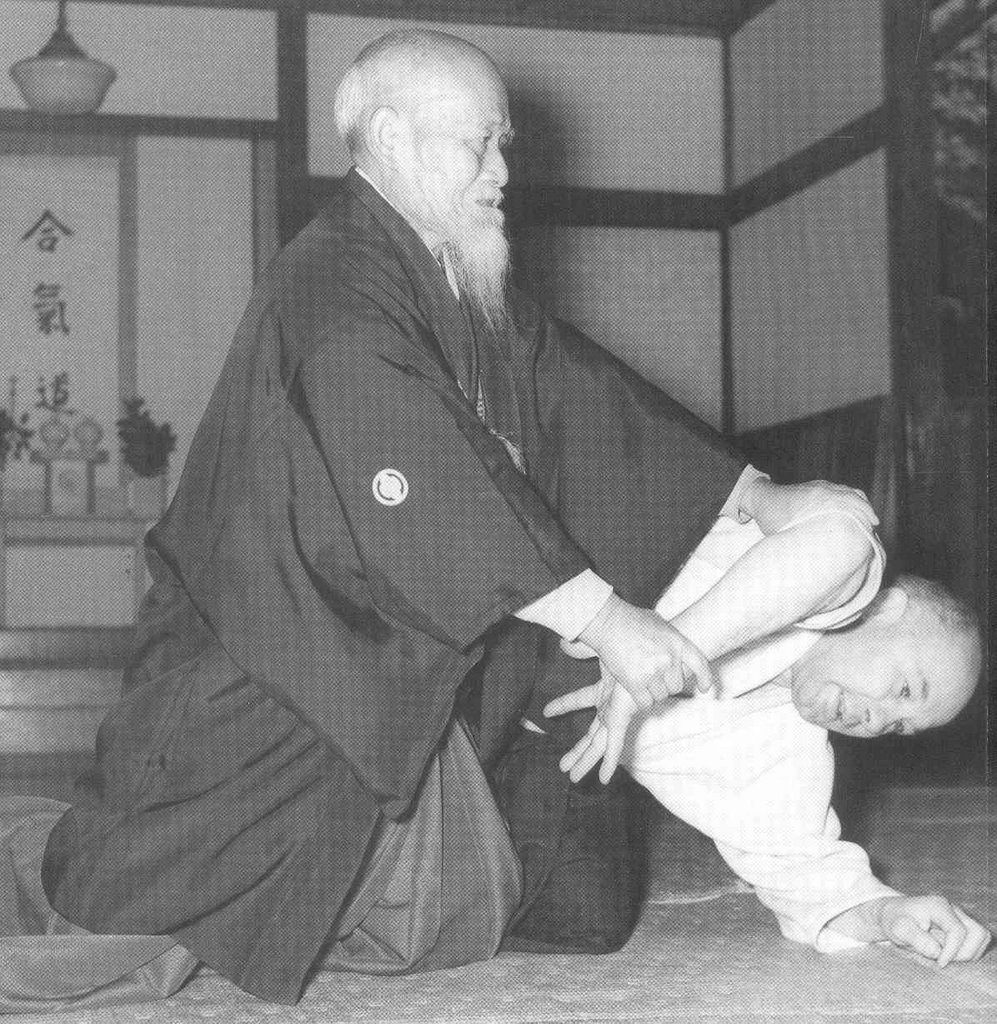
I have read a little of the philosophy of aikido and I understand and more or less agree with its basic principles, however, my appreciation of it philosophically comes not from the writings of Ueshiba (pictured above), but from Spinoza. (I have to confess something of an aversion to Eastern Philosophy. Well not Eastern Philosophy itself, but the whole Quasi-Hippy-Orientalizing-Spiritual-enlightenment-From-Those-Inscrutably-Wise-Asians thing which usually comes from people who are interested in Eastern Philosophy.) As Spinoza famously writes, "...No one has yet determined what the body can do, that is, experience has not yet taught anyone what the body can do from the laws of Nature alone..."(EIIIP2S). Now, I have always appreciated this quote, like a good reader of Deleuze, however, I must admit that I never really understood it until I tried to throw someone twice my size or perform a backward roll from standing.

What I have learned from Aikido is pretty basic: the only way to overcome a more powerful force is to blend with it, and most of all, keep breathing and moving, no matter what happens.

Thursday, August 03, 2006

Voice and Dick

I am still trying to get the hang of this "blogging" thing. (The scare quotes are a mark of age. As in, "You kids and your 'blogging.' When I was a boy we had 'zines.' If you had a bunch of random thoughts, rants, and observations, you had to work to put them out. Spending all night at Kinkos if you had to: photocopying, pasting...and real pasting too, with glue and paper cuts..."). I am trying to figure out what sort of voice I want: that is, other than the old coot voice used above, which I am sure I will use from time to time. By voice I simply mean what sort of things I will write about and how. For example I thought about writing about last Sunday, a truly great day that began with Brunch and ended with a swim in the ocean. As great as it was, I found that it was more enjoyable to live the day than write about it. I will say that I had truly delicious biscuits with vegan white bean and tempeh gravy that apparently came from this cookbook/website.


Film, that is one thing that I will write about. I thought about writing about A Scanner Darkly, but for awhile all I could come up with that I liked it, which is not much to say. (Perhaps Hegel was right, "Periods of happiness are empty pages in history.") Prior to watching the film I read some of Philip K. Dick's short stories, which oddly I have never read despite being such a big fan of Dick (sorry, could not resist that joke, just because I have noticed that most people go out of their way not to use his last name in such a way, hence the ubiquitous moniker PKD.) I focused on a few of the short stories that have been turned into films, namely "Minority Report" and "We Can Remember it for You Wholesale" (the basis for Total Recall).

Read on their own the stories are really just sketches of ideas, which the structure of the American action film are then projected onto. "Minority Report" simply poses the paradox: does knowing the future alter the future? On top of that no one has really done justice to the archetypical Dickian protagonist, who is really just a variation on the same basic character: middle-age, lower-middle class, and generally divorced or in a loveless relationship. Take for example the first line from "Minority Report": "The first thought Anderton had when he saw the young man was: I'm getting bald. Bald and fat and old." I read that and thought, Tom Cruise. I do not think this is simply a superficial aesthetic point regarding Hollywood's unwillingness to cast fat and bald people. Dick's "everyman" character is as much a part of his aesthetic and politics, as the pre-cogs, androids, and the corporations that employ them. Put more bluntly, the translation of Dick's stories into "action movies" does not just add a few hover-car chases to a basic story structure, it alters the basic structure. Action heroes triumph over their circumstances, while Dick's heroes seldom if ever do. For more on the politics of Dick's everyman, see Fredric Jameson's great Archaeologies of the Future.

A Scanner Darkly is the first film based on Dick's stories that is not an action movie (OK maybe Bladerunner). In fact it is mostly dialogue, tripped out stoner dialogue. Given Richard Linklater's (The director) history of films, I think that many people will attribute this aspect to his work on the screenplay--a sort of Slacker take on scifi. After watching the film I reread some of the novel and was surprised that many of the conversations were taken almost verbatim from the novel. (As much as I like Dick's novels I seem to have a horrible memory for them. Generally I retain only an image or an idea and not the plot.) Finally, what I liked most about the film was its ending. Somewhere Slavoj Zizek says that the signature element of Dick's stories is not the simple confusion of fiction (or the virtual) and reality, androids for humans, fabricated memories for real, etc., but the point where what is given as reality is shown to be another fiction. On this point I think that A Scanner Darkly (the film) did a great job. I also like how the film avoids one of the real pitfalls of the paranoid dystopian scifi genre, which is to say most of the films based on Dick's work, the confrontation between the protagonists and some mastermind of the whole thing, in which the concealed truth of the society is revealed. In A Scanner Darkly the revelations are oblique, left to minor characters, the central character remains in the dark.


Saturday, July 29, 2006

Clerks and Cynicism

I went to see Clerks II over the weekend. I cannot exactly say why, the ninety-degree heat had a lot to do with it, but it does not explain the particular choice. I have never really been a Kevin Smith. Watching the film did allow me to pinpoint exactly what I find so vexing about his films.

Kevin Smith likes to consider himself to be shocking and threatening to conventional sensibilities. In this particular film the transgressive scene has to do with a bachelor party bestiality act, or, as it is referred to in the film, "interspecies erotica." This scene which is more implied than shown has already received a great deal of attention in the press. What is not discussed, and I suppose this is something of a spoiler, is that it is during this scene of debauchery that one of the main characters Dante Hicks declares his love for Becky, played by Rosario Dawson. (In this film Dawson plays as much as an adolescent male fantasy as she did in Sin City: in this film she plays the quintessential "girl who is one of the guys,"someone you can discuss porn with and have sex with) Earlier in the film the Becky character had expressed her criticism of the ideal of romantic love, stating that monogamy contradicts basic human nature. Without getting into the limitations of this particular critique of monogamy, I will just say that it is a criticism of sorts, but more importantly it is a criticism that is promptly overcome by the last scene--in the midst of numerous references to bestiality, masturbation, and homosexuality. This is what I find so bothersome about Kevin Smith films (and much of contemporary raunchy comedy), that no matter how shocking and even crude the film gets it never gets in the way of what remains a basically sentimental Hollywood cliche regarding love. The scatological, subversive, and bawdy humor in no way interferes with the ideal of love. The film is about as transgressive as a bachelor party, in the morning, after the strippers have left and the "adult novelty gifts" have been put away, marriage and the church emerge from the ordeal unscathed.

This reminds me of a passage from Deleuze and Guattari's Anti-Oedipus that I have been thinking about as of late. As Deleuze and Guattari write about our contemporary age:

It is no longer the age of cruelty or the age of terror, but the age of cynicism, accompanied by a strange piety. (The two taken together constitute humanism: cynicism is the physical immanence of the social field, and piety is the maintenance of a spiritualized Urstaat; cynicism is capital as the means of extorting surplus labor, but piety is this same capital as God-capital, whence all the forces of labor seem to emanate.) ( pg. 225)

Now I take this phrase to be more of a provocation than an explanation, but I take its central point to be that contemporary "cynicism" is not a critique of established values, but a distance kept with respect to those values. As Peter Sloterdijk argues the cynical subject is quite aware of the distance between the ideological values and the social reality, but still insists on the mask. Which is why Deleuze and Guattari insist that cynicism is inseparable from a kind of piety: the relentless pursuit of profit with an invocation of "values," or, hypersexuality and the ideal of marriage. Cynicism is the coexistence of the highest values and their opposite, without contradiction or tension.

If the citations of Deleuze, Guattari, and Sloterdijk are making this too confusing, The Daily Show makes pretty much the same point.

Now, I am not saying that I hated the film, in fact I rather enjoyed the synchronized dance routine to The Jackson Five's "A B C". I definitely have a thing for synchronized dance routines in films which are not musicals. (This is probably one of the reasons that I love Simple Men so much). I also like its last minute spirited defense of the the "slacker" lifestyle.

Friday, July 28, 2006

Doppelganger


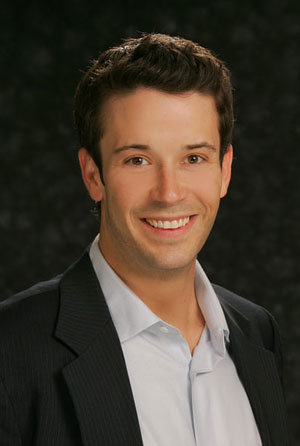
While a bit of paranoia about blogging prevents me from putting too many identifying characteristics on this blog, I figure that the following is oblique enough. I ran into a former student at the grocery store. The first thing she says is "you probably do not watch television, but...." Well, I am not sure what to make of this: should I take it as a compliment, meaning that I appear to be so knowledgeable in my teaching that I could not possibly be spending time watching TV? Or, is it just part of the general way in which students perceive professors, as strange creatures who live in their offices and only travel to the library? Anyway, she went on to tell me that she and other students (who were not counted or named) had come to the conclusion that I resemble this person (pictured left) one of the "stars" of the reality TV show "Big Brother." I do not know what to think of this, the person seems a bit bland by my taste. Does anyone really like "Kashi Go Lean"?


Just for the record, my last doppelganger according to students was Rivers Cuomo. This is something that they actually wrote on student evaluations, which have now become a part of my permanent pre-tenure record.

Neither of these qualify as a true doppelgänger. In order for that to happen there must be consensus. A true doppelgänger is a famous person who one is compared to regularly and consistently.

Thursday, July 27, 2006

There are other ways to deal with jet lag, I suppose


After a long night flying back from the west coast I decided to start this blog--unemployed negativity. What does the title mean? Well the term itself comes from Bataille. But I am so not interested in its pedigree. For me the term suggests a sort of surplus of critical energy, moving beyond the official channels of research, teaching, etc. Besides I have more projects than titles right now, and I have to save the really good titles.

I flew Jet Blue for the first time, and while I enjoyed the blue chips, direct TV, and free wireless in JFK, I found one thing somewhat unsettling. Before take off the little TV screen, which is positioned front and center, kept flashing a series of little bits of advertising copy such as "Without you we would just be flying a bunch of televisions around the country" and "You are our favorite customer, but do not tell anyone." I might not have the wording right on those, but the latter pretty much matches one of the bits of advertising copy from Jose Saramago's The Cave. In Saramago's novel the advertising is for the center, a mall/urban center, which in the novel is pretty much a metonym for global capitalism itself. This overlap, in which, well what exactly...? Ironic advertisement imitates its own critique? Critique preempts that which it is critiquing?Or, some lazy but well read copywriter needs to give Saramago the credit? got me thinking about the challenges of representing corporations or representing capital in literature and film. Most of the attempts to do this fail, think of all of the Omnimarts, Megamarts, Megacorps, etc. that show up in film and TV. These lack in sublety, they are like films in which the villans wear elaborate uniforms with skulls on their epalets and toast "to evil." And Jet Blue's "Without you we would just be flying a bunch of televisions around the country" with its hint of human beings reduced to "conscious organs," a missing component of all of those TV's, already offers its own little critique.

I have to admit that I found the problem of representing capitalism interesting. It is why I read Saramago's novel. To do it well one must dispense with an evil genius, a secret lair, or even a master plan and get at the way in which capitalism functions anonymously, abstractly, through the work of all sorts of well intentioned people. Doing it well also means grasping the way in which corporations are incredibly adept at maintaining their image, to the point where they are the cultural critics.