
Showing posts with label Neoliberalism. Show all posts
Showing posts with label Neoliberalism. Show all posts
Wednesday, September 11, 2024
Towards a Genealogy of Right Workerism: Notes on the Origin of Bizarro World

Wednesday, June 19, 2019
Doppelgängerland: The New Monster is Us

Monster come in cycles. Werewolves wax and wane in and out of cultural visibility, and even vampires disappear and return. There might even be an end to zombie movies someday. Perhaps the current period will be known as the year of the doppelgänger. I am referring not only to Jordan Peele's brilliant Us, but also the return of the mirror universe in Star Trek: Discovery and Counterpart on Starz. If one wanted to add a literary reference one could include Ted Chiang's story "Anxiety is the Dizziness of Freedom." (I know that there might be more stories and novels, I just reading Exhalation now and cannot resist plugging it).
Thursday, May 16, 2019
Breaking the Curse: On Three Recent Attempts to Theorize Neoliberalism

Moose and Lon Chaney Jr. on the set of The Wolfman
I could justify this by the way I have written about werewolves and capital, but the truth is that I just like it
To begin with something of a dialectic. The strength of neoliberalism as a concept is how expansive it is; it offers not just an account of capitalism, of economic relations, but culture, politics, and even subjectivity. The weakness of neoliberalism as a concept is how expansive it is, making it possible to call everything and anything from Uber to yoga neoliberal. It proposes a night when all cows are black, or, more to the point, when all cows are entrepreneurs of their direct farm to market line of organic milk products, as competition and entrepreneurial relations are everywhere. However, to borrow a line from Marx, this excess and limitation does not go from text books into reality, but from reality to textbooks. The instability and expansiveness of the concept might just have something to do the reality of the thing.
Tuesday, December 18, 2018
It's Competition All the Way Down: On the Spontaneous Anthropology of Contemporary Capitalism

As much as people love to cite that ubiquitous remark by Fredric Jameson about the end of the world and the end of capitalism. You know the one. There is another, less discussed line, that covers the same terrain of ideological struggle and the limits of the imagination that I prefer. It is, “The market is in human nature’ is the proposition that cannot be allowed to stand unchallenged; in my opinion, it is the most crucial terrain of ideological struggle in our time.”
Monday, November 05, 2018
We Once Were Ungovernable: On Chamayou's La Société Ingouvernable

Perhaps the best way to make sense of the present order is to consider first the disorder, the contestation of the old order. This could be considered the autonomist hypothesis applied to politics, and it is the underlying method of Grégoire Chamayou’s La société ingouvernable: Une généalogie du libéralisme autoritaire.
Saturday, October 03, 2015
What the Shopkeeper Knows: Reading Contemporary Capitalism

Whilst in ordinary life every shopkeeper is very well able to distinguish between what somebody professes to be and what he really is, our historians have not yet won even this trivial insight. They take every epoch at its word and believe that everything it says imagines about itself is true.
--Marx and Engels, The German Ideology
One of the persistent themes in Peter Fleming's The Mythology of Work: How Capitalism Persists Despite Itself is a critique of Lordon's Willing Slaves of Capital. What is criticized is not the particular synthesis of Marx and Spinoza, but how Lordon reads management literature. Fleming criticizes Lordon for taking management discourse at its word, for seeing motivation and the various demands to "love one's job" as something other than smokescreens for a strategy of fear and anxiety.
Sunday, January 12, 2014
Commonalities: On Gilbert's Common Ground
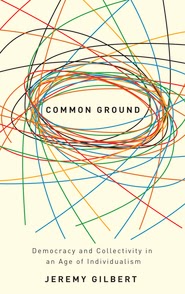
Full disclosure: I met Jeremy Gilbert at a Deleuze
conference in Wales in the summer of 2008. He gave an interesting paper on
Deleuze, Guattari, and Gramsci and I ended up talking to him at pub. The
conversation was one of shared interests that went beyond Deleuze, it was a
Deleuze conference after all, to include Simondon, transindividuality, and the
broader problem of reimagining collectivity in individualistic (and
individuated) times. As anyone in academia knows, the experience of meeting
someone with shared interest is often ambivalent. There is the joy of finding
someone to talk to, of feeling less alone in the wilds of academia, coupled
with the sadness of feeling less original, less insightful. The latter feeling
is of course intensified by a publishing culture that is predicated less on
collective projects and more on developing a highly individuated name for
oneself. In the years since then, as our projects progressed (his made it toprint first) we joked about constituting a new school of thought,
Transindividual Ontology and Politics (TOP)?
Sunday, December 15, 2013
Personalized Ideology (or Ideology Personified): Silva's Mood Economy

Do not demand of politics that it restore the “rights” of the individual, as philosophy has defined them. The individual is the product of power. What is needed is to “de-individualize’ by means of multiplication and displacement, diverse combinations. The group must not be the organic bond uniting hierarchized individuals, but a constant generation of de-individualization. Michel Foucault, Preface to Anti-Oedipus.
In the past few weeks I have returned again and again to the idea of "negative solidarity" that I outlined on this blog. I found myself mentally bookmarking news reports and articles that seem to be evidence of hostility to any collective organization for wages or benefits, not to mention larger or more structural transformations. The affect of ressentiment, the distinct sense that someone somewhere was benefiting at your expense, seemed prevalent. (Of course the "someones" in this situation are always those on social welfare programs, state employees, etc., never capitalists, investors, etc.) However, negative solidarity risked having all of the characteristics of what Althusser called a "descriptive theory," a sophisticated sounding recasting of what one already knows and thinks. The dangers of descriptive theories is that they provide a moment of recognition, ("That is it, dude; totally,")but no way to move forward. So the question which I returned to again, is how to account for the genesis and constitution of negative solidarity, how to move beyond description. This is a question of socio-political theory, but it is a necessary precondition of political action as well. Negative Solidarity is in that sense another name to the barrier of any politics whatsoever.
Sunday, August 11, 2013
Negative Solidarity: Towards the Definition of a Concept

Even though it is not a recent post, I was struck by this post on "negative solidarity" on the blog splintering bone ashes. To cite from the blog:
Wednesday, May 22, 2013
We are all Neoliberals: Dardot and Laval's La Nouvelle Raison du Monde

Neoliberalism has become an increasingly popular word in contemporary critical thought and philosophy. Its popularity has come at a cost, however, as the meaning of the word has been reduced to a few vague inclinations about the truly bad kind of capitalism held together by invocations of competition, markets, and individualism. It has become what Althusser called a descriptive theory at best, and, at worse, a way to speak about capitalism without speaking about capitalism. In the worse case it became the name for a kind of nostalgia for an earlier kinder and gentler capitalism, one that we could get back to as soon as the full impact of the recession was felt and people started really paying attention to Paul Krugman.
Thursday, February 09, 2012
Starting from Year Zero: Occupy Wall Street and the Transformations of the Socio-Political

Day and Night, by Occuprint
To consider what Occupy Wall Street has to do with philosophy, to Occupy Philosophy, is already to depart from one of the longstanding dictums of the relationship between philosophy and political invents. I am thinking of Hegel, who as much as he argued that philosophy is its own time comprehended in thought, also famously argued that philosophy can only comprehend its own time retrospectively, can only paint grey on grey once the ink has dried. Occupy, or OWS to use a preferred moniker, preferred not because it ties the movement to the hashtag, making it one of the many instances of the supposed twitter revolutions, but because it abstracts the movement from a specific place making it a general political transformation and not a specific occupation, is very much an active movement. Any statement about it, about its ultimate meaning, possibility, or limitations, must confront the fact that it is still in the process of shaping and forming.
Monday, June 14, 2010
The Methlab of Democracy: More on the Micropolitics of Neoliberalism

In a recent episode of The Daily Show, Jon Stewart, in a quip that is smarter than he knows, referred to Arizona as “the methlab of democracy.” His reference is primarily to the immigration law. Stewart probably just meant that Arizona’s law is crazy, hence methlab. (Crazy and racist, he actually gets in some good points about the latter as well, comparing the law to slavery era legislation). However, I think that there is a good reason that “meth” is the drug of our era, in the same way that pot, crack, and coke, all seemed to metonymically stand in for their respective eras, expressing the “tune out” rebellion of the sixties, urban poverty of the post-civil rights era, and "irrational exuberance" of the nineties. (This is something that the underrated TV series Breaking Bad has picked up on: the show not only deals with meth but is set in the strip malls and housing developments of New Mexico, reflecting America's new spiritual home.) The major ingredient of meth is synthesized in corporate labs, but it is “cooked” in trailer parks. Meth stands in for the short circuit between corporate power and rural anger that seems to define contemporary US politics.
The most recent Harper’s also offers an examination of Arizona as the laboratory of America politics, as a place in which the “tea party” has already taken power. Perhaps the most interesting part of the article is the following quote by an unnamed government worker:
“People who have swimming pools don’t need state parks. If you buy your books at Borders you don’t need libraries. If your kids are in private school, you don’t need K-12. The people here, or at least those who vote, don’t see the need for government. Since a lot of the population are not citizens, the message is that government exists to help the undeserving, so we shouldn’t have it at all. People think it’s OK to cut spending because ESL is about people who refuse to assimilate and health care pays for illegals.”
Putting aside for a moment the odd racist conflation of non-citizens and the undeserving at the end of the passage, the first part is strikingly similar to a passage in Wendy Brown’s analysis of neoliberalism:
“As neoliberalism converts every political or social problem into market terms, it converts them to individual problems with market solutions. Examples in the United States are legion: bottled water as a response to contamination of the water table; private schools, charter schools, and voucher systems as a response to the collapse of quality public education; anti-theft devices, private security guards, and gated communities (and nations) as a response to the production of a throwaway class and intensifying economic inequality; boutique medicine as a response to crumbling health care provision; “V-chips” as a response to the explosion of violent and pornographic material on every type of household screen; ergonomic tools and technologies as a response to the work conditions of information capitalism; and, of course, finely differentiated and titrated pharmaceutical antidepressants as a response to lives of meaninglessness or despair amidst wealth and freedom. This conversion of socially, economically, and politically produced problems into consumer items depoliticizes what has been historically produced, and it especially depoliticizes capitalism itself. Moreover, as neoliberal political rationality devolves both political problems and solutions from public to private, it further dissipates political or public life: the project of navigating the social becomes entirely one of discerning, affording, and procuring a personal solution to every socially produced problem. This is depoliticization on an unprecedented level: the economy is tailored to it, citizenship is organized by it, the media are dominated by it, and the political rationality of neoliberalism frames and endorses it.”
As I have argued elsewhere, Brown’s passage and the remarks from Arizona, demonstrate a kind of micropolitics of neoliberalism. The way in which neoliberalism does not just operate at the level of state policy, but at the level of quotidian practices and daily transactions. These practices and transactions produce a subject that sees him or herself as isolated and autonomous, producing disconnection that alternates between absolute freedom and total alienation.
All of this is offered as something of a rejoinder to J.M. Bernstein’s recent piece for The New York Times philosophy column. Bernstein writes the following:
“My hypothesis is that what all the events precipitating the Tea Party movement share is that they demonstrated, emphatically and unconditionally, the depths of the absolute dependence of us all on government action, and in so doing they undermined the deeply held fiction of individual autonomy and self-sufficiency that are intrinsic parts of Americans’ collective self-understanding.
The implicit bargain that many Americans struck with the state institutions supporting modern life is that they would be politically acceptable only to the degree to which they remained invisible, and that for all intents and purposes each citizen could continue to believe that she was sovereign over her life; she would, of course, pay taxes, use the roads and schools, receive Medicare and Social Security, but only so long as these could be perceived not as radical dependencies, but simply as the conditions for leading an autonomous and self-sufficient life. Recent events have left that bargain in tatters.”
Bernstein primarily sees the Tea Party as a conflict between two views of freedom: one liberal, in which freedom is naturally given and must be realized, and the other Hegelian, in which freedom is a historical product, made possible by institutions. This is all well and good, but Bernstein then argues that the Tea Party is ultimately a metaphysical rather than political rebellion: they have no concrete proposals and are primarily reacting to a loss of a metaphysical ideal, that of the individual. The opposition between the metaphysical and the political overlooks the dimension of political economy entirely, or what I would prefer call, following the remarks of Brown and the anonymous citizen from Arizona, the micro-politics of political economy, the point where political economy intersects with and transforms subjectivity. An adequate response to the current conjuncture cannot simply return to the opposition of Locke and Hegel, or politics versus metaphysics, but must take seriously the transversal intersections of politics, economics, and metaphysics. (Incidentally, this is something that Hegel does in his discussion of “Civil Society”).
Wednesday, May 05, 2010
De te fabula narratur: Reflections on Middlesex

For the past week I have been preoccupied, perhaps even obsessed, with Middlesex University’s decision to close its internationally recognized program in philosophy. This is in part because I know some people affected. I have been fortunate to meet some of the faculty, graduates, and students at Middlesex, all of who have impressed me with their intelligence, passion, and generosity. More immediately, as someone who teaches philosophy, I know students, or former students, who have aspirations to attend graduate school at Middlesex. All of these people will be immediately affected by this change.
My preoccupation with this particular tragedy, and I can think of no other word, to describe it, extends beyond the immediate effects on friends, colleagues, and students. First and foremost I see the loss of Middlesex (and the center and journal that it hosts) as a loss to philosophy, specifically to the study of contemporary continental philosophy. One of the positive developments of the past ten years (such things do happen) has been the development of an immediate global context for philosophical discussion: conferences go up online as they are taking, or are at least quickly summarized in blogs and online discussions. One no longer has to wait for journals and proceedings to learn what is being thought elsewhere. Middlesex has been an important node in this network, relaying crucial discussions and conferences, and often serving as a transfer point between francophone and English debates and discussions. Its loss will thus be immediately felt. Beyond this I fear that this particular UK case, despite its idiocy and the fact that it is caught up in the specific and somewhat arcane bureaucracy of the UK university system (summarized in part here) is but a portent of a global situation. As Marx once wrote to his German, readers regarding his own analysis of a specifically British situation, the rise of the factory in the early industrial revolution, “De te fabula narratur” (the story concerns you).
The current conjuncture in terms of both its immediate crisis of capital and long term restructuring has lead to an assault on higher education. Of course the immediate crisis and long term restructuring can only be separated heuristically, only in the sense that we face both immediate cuts, cuts justified in and through their immediacy (No time to talk, to discuss, to plan, we need to cut now!) and long term transformations, as the university becomes less and less a place of reflection and research and becomes more and more of a job training center, or some supposed miraculous engine of growth. The latter has been going on for some time, and is part of both neoliberal restructuring and the changing dynamics of labor in post-fordism. The current crisis has only exasperated this tendency, creating a sense of urgency and scarcity, the idea that everything must go into fixing the economy. Thus, making the short-term crisis an alibi for the acceleration of the general transformation, for the general reduction of everything to an economic logic of competition. It is worth noting that things could have gone otherwise (and still could) the economic crisis could lead to an interrogation of precisely what counts as knowledge in these fields. Instead all we got were some vague ideas of teaching ethics at business schools.
Middlesex was not the first philosophy program cut and it will not be the last. Moreover, this trend is not just limited to philosophy, but includes classics, literature, women’s studies, and basically everything that cannot justify itself in terms of grant money and private donations. The question that we need to ask is how best to counter this tendency. How best to fight it? What actions and words can we use? As far as I can see there are three strategies.
The first is to claim that the skills taught in the humanities, in the liberal arts, critical thinking, various literacies, reading and writing, etc., are useful for the world of business. They are the cultivation of the general intellect as intellect in general: the development of flexible skills that can be applied to any situation. This strategy seems to be incredibly shortsighted, and risks losing the war to win a few battles here and there.
The second strategy is to make an appeal to tradition, to the ideals of the university as free inquiry, and citizenship. This liberal tradition has stronger tactical merits than the former strategy which accepts, but inflects, neoliberal justifications. There is something to be said for the claim that a university without a philosophy program, without languages, without literature, and so on, is not a university at all. However, these words, citizenship, liberal arts, seem to be empty in the mouths of the very people who utter them. Moreover, they risk contributing to the general division between schools that will be concerned with such lofty goals and those that will dedicate themselves to practical matters. What is so striking about the Middlesex case is how quickly the administrators in question dismissed any claim of its excellence.
Finally, there is a third strategy emerging from the sites of struggles themselves, from the takeovers in the University of California system and from the response to Middlesex (see the picture above). This strategy is to see the university not as some exception to society, as an ivory tower, but as fully a part of the social factory, of the production and reproduction of knowledge, which is to say wealth, in society. Thus, in the short term, the struggle for the fate of the university cannot be separated from the immediate question of how the crisis is paid for: the slogan “we will not pay for your crisis” encapsulates this nicely. More importantly if we are living through a knowledge economy then there is no separation between the struggle over knowledge, who gets to learn, who benefits, etc., and the general struggle for the economy, for the production and circulation of wealth. To put it briefly the contemporary university is an object lesson in the inseparability of the economic and the political. Cutting funding, increasing loans, immediately curtails curiosity, steering students towards those subjects that will supposedly guarantee an ability to pay loans back: academic freedom without resources is meaningless. The existing struggles go beyond this lesson in what Balibar calls “equaliberty” to become a crucial site for the construction of a commons, of an economy based on openness and access rather than scarcity and competition.
Clearly I am in support of the third strategy, a strategy and politics that is already underway without my meager support. It is perhaps the most difficult, the most radical, but paradoxically it is also the most practical. After all, the connections are already there.
Sunday, April 18, 2010
The Brain that Would Not Die: Between Caricature and Creation

In Multitude Hardt and Negri write that “Each [historical] period is characterized by one or several forms that structure the various elements of social reality and thought.” They argue that the contemporary form is the network: everything from technology, to society, to the environment, to the brain itself is envisioned as a network. Networking is our word for friendships and machines alike. Hardt and Negri’s thesis, a thesis that I am tempted to sum up with the formulation “every mode of production imagines the world in its own image,” even though they are making an argument that is derived more from Foucault, Deleuze and Guattari than Marx, raises interesting questions. It is easy to see this in retrospect, to see the persistence of mechanistic modes of thinking in the seventeenth century, and a general problematic of thermodynamics of heat and pressure in the nineteenth century. (What is class struggle but the engine that drives history?) What remains to be seen, however, is what this means for us in the present? What do we do with a concept, or an image of thought, that would seem to be part of this general social structure. What do we do with these forms of thought? Do we dismiss them as the ideological residue of the existing social order?
This question is one of the central questions of Catherine Malabou’s What Should We Do With Our Brain? At the outset the central concern of this book is to bridge a gap between continental philosophy and neuroscience, but this is ultimately secondary to Malabou’s interest in the dominant image of the brain in neuroscience. “Plasticity” is the concept underlying each of these problems. Plasticity, the capacity to both give and receive from, to be formed and formative, is the link between Malabou’s earlier work on Hegel and the current work on neuroscience. Recent developments in neuroscience suggest that the brain is less hardwired than constantly rewiring itself: as new memories are formed, new pathways and connections are formed. We form our brain, our neural connections, as it forms us.
“Plasticity, between determinism and freedom, designates all the types of transformation deployed between the closed meaning of plasticity (the definitive character of form) and its open meaning (the malleability of form). It does this to such a degree that cerebral systems today appear as self-sculpted structures that, without being elastic or polymorphic, still tolerate constant self-reworking, differences in destiny, and the fashioning of a single identity.”
It is this idea of plasticity, of a brain that is less a sovereign instance of command than a decentered network of connections, that brings us back to the specific image that Hardt and Negri cite, as well as the general problem of the image of thought. As Malabou argues, the modern decentralized and plastic brain is in many respects the image of contemporary capitalism, which is governed less by central command, the central nervous system, than by the imperatives of flexibility, decentralization, and connection. The image of the contemporary brain is the image of the neoliberal world.
One could use this to dismiss these discoveries, to see them as another instance of neoliberalism making the world in its own image. One could view the plasticity of the brain like evolutionary psychology, which makes the neoliberal subject, homo economicus as entrepreneur of himself, the image of subjectivity itself: we are all investors in our genetic material, seeking the best return on our investment. This is not Malabou’s conclusion. She seeks to draw a line of demarcation between science and the spontaneous ideology of the scientists, to use Althusser’s terms, or between the caricature and the possibility that it conceals, her terms. As Malabou writes, “Not to replicate the caricature of the world: this is what we should do with our brain.” The line of demarcation between the caricature and possibility hinges on the distinction between flexibility and plasticity. Flexibility is a management watchword that stresses the ultimate ability for employees to constantly be remolded and shaped according to the demands of the labor market. As such it only captures half of what it as stake in plasticity, which is both a being molded and activity molding. Flexibility is plasticity refigured as passivity. In some sense flexibility is less than half, it is not just the active component that flexibility overlooks, but also the fact that the reshaping and being reshaped is not a smooth process. We are constantly transforming ourselves and being transformed, but this does not take place without tension and crisis. As Malabou writes, “Paradoxially, if we were flexible, in other words, if we didn’t explode at each transition, if we didn’t destroy ourselves a bit we could not live. Identity resists its own occurrence to the very extent that it forms it.”
What is intriguing is that Malabou offers an interesting case study in how to think through the image and the caricature of the world. It almost goes without saying that any image that we have of the world, whether it is produced by science, technology, or politics, is going to be something of a caricature. It will be a product of the dominant institutions (plasticity itself will demand it) but it will not be just that (plasticity once again). The trick is drawing the line of demarcation, of extracting creativity from the caricature.
Sunday, January 24, 2010
You Would Make a Good Cop: Wacquant on the Neoliberal State

Loïc Wacquant’s Punishing the Poor: The Neoliberal Government of Social Insecurity is a book that had been recommended to me by many people. I have not read anything else by Wacquant, nor have I read much in the emerging studies of the prison or “prison-industrial complex” (a term that Wacquant rejects, by the way). Like many trained in philosophy, my understanding of the politics of the prison begins and ends with Foucault’s Discipline and Punish. I have, however, read and written some on neoliberalism, so it is primarily from that perspective that I approach the book.
First of all, it is worth saying that the book presents an exhaustive and depressing picture of the United States as a country that has increased the penal population drastically in the last thirty years (from 1.84 million in 1980 to 6.47); an increase that has nothing to do with any corresponding rise in crime. It is fueled by the “war on drugs” and a get tough on crime attitude that enforces mandatory sentencing and harsh penalties. This increase is coupled with a massive gutting of social spending and a transformation of welfare to workfare. The end result, and this is Wacquant’s central argument, is that there has been a fundamental shift in the way in which America deals with its subproletariat, the people at the bottom of the economic ladder, burdened by racial discrimination and longstanding marginalization. We lock them up: prison is our social program.
However, I am not really prepared or able to assess the book at the level of statistical and historical analysis. I am more interested in viewing it at the level of political philosophy, as a theory of the state. Wacquant makes it clear that he intends to view the rise of penal technologies economically, rather than as part of some new regime of power, but at the same time, they cannot be viewed simply economically. This is why Wacquant rejects the term “prison-industrial complex,” which too easily reduces the rise of the prison to the economic interest of a dominant industry. The materialist explanation must be understood along with the symbolic dimension, or, in Wacquant’s terms, Marx must be read with Durkheim.
“Weaving together concerns for control and communication, the management of dispossessed categories and the affirmation of salient social boundaries, has enabled us to go beyond an analysis couched in the language of prohibition to trace how the expansion and redeployment of the prison and its institutional tentacles…has reshaped the socio-symbolic landscape and remade the state itself. Tracking down the conjoint material and symbolic effects of punishment reveals that the penal state has become a potent cultural engine in its own right, which spawns categories, classifications, and images of wide import and use in broad sectors of government action and civic life.”
As Wacquant argues, despite its overarching rationale, the transformation from welfare to penalization is not necessarily efficient. Welfare spending, what Wacquant refers to the charitable state, was always a small part of federal spending, dwarfed by aid to middle and upper class families in the form of mortgage tax credits. Everyone knows the often-cited statistic regarding the cost of incarceration versus the cost of education. Wacquant’s point is that such purely economic analyses miss what he refers to the symbolic dimension. The destruction of the remnants of a social safety net and its replacement with a punitive dragnet is justified by a moral idea of individual responsibility, in which everyone must be held individually accountable. This moral individualism is reinforced by a racism that is wise enough to remain more or less implied: all of the deviant subjects that inform the contemporary discourse of responsibility, from welfare queens to delinquents, are black. As Wacquant writes, detailing the racist dimension of “welfare reform,” “As the poor grew darker in the collective conscience, they were also cast in an increasingly unsympathetic and lurid light, as irresponsible, profligate and dissolute.”
This is not to say that this moral individualism does not have an economic function. Wacquant’s central point with respect to neoliberalism is that the destruction of social services and increasing powers of surveillance have as their ultimate function the regulation of population exposed to the precariousness of labor conditions. It is a matter of a new regime of discipline; a new regime of discipline to produce a new laboring subject, one that must accept instability and poverty as facts of life. For Wacquant the neoliberal state is a police state through and through. (He thus rejects Harvey’s analysis which leaves the security/penal dimension to the side, or others who see in the repressive arm of the state some sort of hybrid of neoliberalism and neoconservatism.) The only legitimate interventions into social life are those attached to the ideas of security and discipline, and these interventions are quite extensive, but any other intervention, any attempt to ameliorate the precariousness of life under market conditions, is immediately suspect.
Wacquant’s thesis of the symbolic dimension of prison reverses Foucault’s claim that we have done away with the spectacle of the scaffold. We may have done away with public executions and the chain gang, but that does not mean that the prison has retreated from public view. The prison has reemerged as part of a “law-and-order-pornography” that appears in campaign slogans and in a criminal culture made up of such shows as Cops and America’s Most Wanted. Wacquant says more about the former than the latter, which is unfortunate since the cultural dimension would seem to be integral to understanding the contemporary regime of penal power.
What interests me the most, at least theoretically, about Wacquant’s book is his assertion that prison and “workfare” most be viewed twice: materially at the level of economic structures and symbolically at the level of values, meanings, and images. These two dimensions follow each other, as Spinoza argued that the order and connection of ideas follows the order and connection of things, but they do no always coincide. As Wacquant argues voters in the U.S. do not want to pay for the penal state that they support. Moreover, one could say that the entire effort to “change welfare as we know it” was based on an entirely fictitious understanding of the overall cost of the government’s rather minimal expenditure on Aid to Families with Dependent Children. To this day one still sees the bumper sticker which reads, “Keep Working: Millions on Welfare Depend On You.” The symbolic dimension of welfare far exceeds the economic rationale. What matters most is not the economic justification, the reduction in state spending, but the symbolic dimension of the economy itself, the values of work and discipline. The same could be said for demand to be tough on crime, which continues to be a necessary refrain of elected officials despite decades of decline in crime. The destruction of the welfare safety net and the tightening of the security net are political strategies that exceed any strictly economic utility. They intersect with the economy obliquely only through their common denominator, that of the disciplined subject of labor.
Two (hurried) conclusions follow from this:
First, I think that much could be done with Wacquant’s general point that institutions should be viewed in terms of both the symbolic and material dimensions. One could apply this analysis to the “market” itself, which functions as a powerful symbol and image more than a reality. The image of the market has gone beyond “freedom, equality, and Bentham” to become the site of a massive libidinal investment, it is a free place where desires are realized. Such an image is at odds with its mundane functioning as the distributor of all kinds of materially necessary goods, not to mention the labor market, which produces insecurity and fear rather than desire.
Which brings me to my second point, one could conclude that the state is not only thoroughly repressive, but that “we” who support it are thoroughly fascist in our desires. We cry again and again for more cops and less bread. However, following the maxim that there is a utopian dimension in even the most repressive ideology, it is possible to perhaps see a glimmer of liberation in this desire for repression. It is possible that our obsession with “welfare queens” and prisoners watching cable television might just be our own muted revolt against the current regime of work. Not to mention the fact that this obsession with people who do not work, who live off of the work of others, is a Marxist critique inverted. I have often thought about making my own version of the bumper sticker mentioned above. It would read, “Keep Working: The Capitalist Class Depends On You.”
Tuesday, October 20, 2009
Reductions/Amplifications of the Political

I realize that I have been neglecting this blog as of late, and, to be honest, that is not going to change in the next few weeks. I am at the point in the semester when anytime that I have for writing is dedicated to upcoming presentations or other crashing deadlines. Of course this is not a crisis, but I feel the imperative to post even if few people ever come to this blog. Caught between the imperative to post and the lack of time to write I scrounged around looking for anything that I have written in the past year or so that has not found a home. Well, I have this piece which is essentially homeless: I presented versions of it, but its breadth of references (Aristotle, Locke, Hegel, Marx, Rancière) give it a widely speculative, if not rambling, quality. No journal or book would accept this, it is the kind of thing that only gets published if you are famous and dead. Parts of it have been expanded to become the basis of actual publications, but the rest has been left to "gnawing criticism of the mice" or their twenty-first century digital equivalent. I realize that I am not exactly selling this, so I should mention that there is much in this that I am committed to: the critique of social contract theory, the oblique approach to the Hegel/Marx relationship, and the distinction mentioned in the title, all seem like worthwhile ideas.
Sunday, May 24, 2009
We Are All Neoliberals

This is something of a follow up to a previous post. It is actually awkwardly framed between reflections on “the current crisis” and some attempt to compile some notes on the work of Maurizio Lazzarato. In many ways the political terrain has changed; it is no longer true that there are no popular protests to the current capitalist crisis and the government response to it. There are the infamous Tea Parties, but these are not protests against capital, against profits, exploitation, and corporate power, but against government, against taxes, and “socialism.” Of course their status as actual political protests can be disputed, they have more of the status of simulated protests, advertised and televised. It is a perfect example of that all too clever neologism “astro-turf,” an artificial or simulated grassroots organization.
I do not want to discuss these protests here, but merely entertain a hypothesis. The current economic crisis is not only a crisis of neoliberalism but in neoliberalism as well. The first part of the statement should be fairly clear. As I stated earlier, it is a crisis of the idea of the market as a self-regulating system, capable of not only governing over itself but of all other areas of social life. This first aspect, this crisis of neoliberalism, is seriously complicated by it being a crisis in neoliberalism. By “in” neoliberalism I mean that this crisis takes place within a terrain in which the dominant common sense is shaped by neoliberalism.
In order to clarify what this means I take as a starting point a remark by Maurizio Lazzarato in Les gouvernement des inégalités: critique de l’insécurité néolibérale. Lazzarato argues, following Foucault, that neoliberalism has as a fundamental project a polarization of power and wealth that simultaneously seeks to neutralize the antagonisms that such a polarization risks producing. As Lazzarato points out, it does this through a disintegration of the social: health insurance is replaced by individual savings accounts and social security by individual investment accounts. Against everything that would produce a common problem and a common solution, neoliberal “social” programs reduce to individual solutions, solutions that demand different, which is to say unequal, results. On this point Lazzarato is repeating a refrain that can be found in Brown and Foucault.
Although it is worth pointing out that Lazzarato critiques the latter (and is most likely unaware of the former) for failing to adequately consider the role of “financialization” in the formation of neoliberalism. Lazzarato thinks that financialization should be considered not just as an economic strategy, as a mode of generating wealth, but as a political strategy as well, a transformation of subjectivity. Most importantly it is a manner of shifting the understanding of risk. He argues that Fordist policies of social security (in France) were legitimated by the asymmetry of power between employer and employee implied in every labor contract. It was compensation for subordination in the labor process. There was an understanding of an asymmetry of risk. Financialization transforms this social risk to an individual risk. It is no longer the risk of a class, but of the individual conceived no longer as a member of a class, defined by wages or profits, but the general figure of investment. Lazzarato then turns to Deleuze and Guattari’s discussion of money, specifically the way in which the asymmetry of the two flows of money, payment and credit, are effaced by the same object, by money.
(Lazzarato’s turn to the discussion of money in Anti-Oedipus is interesting for two reasons, reasons that are somewhat peripheral to my discussion here. First, it represents a more nuanced engagement with Marx than Lazzarato suggested in Les Révolutions du capitalisme. Not that Deleuze and Guattari’s discussion of finance capital is doctrinaire, but that is precisely the point; in Révolutions Lazzarato reduced Marx to a caricature of doctrine. Second, it turns attention to an important and overlooked dimension of Deleuze and Guattari, the theory of finance, which is important for a critique of neoliberalism.)
At the core of Deleuze and Guattari’s critique of money is that idea that money reduces the qualitative difference between wages and surplus value, or profit, represented by the equations C-M-C and M-C-M, to a simple quantitative difference. The only thing that separates the wage earner and the capitalist is a certain quantity of money, with a few dollars more my savings could become an investment. Financialization continues this trend by transforming the minimal elements of social welfare, pensions, health care, and social security, all which are the products of social struggles, into individual investments.
All of this culminates in “human capital” the term of the complete effacement of the difference between wage and surplus value, worker and capitalist. In another essay, Lazzarato cites a remark from Deleuze and Guattari in which capital is defined as a “point of subjectivation that constitutes all human beings as subjects; but some, the ‘capitalists’, are subjects of enunciation […], while others, the ‘proletarians’, are subjects of the statement, subjected to the technical machines.” Capitalist and worker are differentiated according the one who speaks and the one who is spoken. (I must admit that I have never really been interested in this distinction, I much more interested in the second point) human capital combines these two aspects, making everyone capitalist and worker.
“The transformation of a salaried employee into “human capital”, into an entrepreneur of her/himself, a transformation facilitated by contemporary management techniques, represents the fulfilment of the process of subjectivation and exploitation, since in this case it is the same individual who splits in two. On the one hand, the individual brings the subjectivation process to its pinnacle, because in all these activities s/he involves the “immaterial” and “cognitive” resources of her/his “self”, while on the other, s/he inclines towards identification, subjectivation and exploitation, given that s/he is both her/his own master and slave, a capitalist and a proletarian, the subject of enunciation and the subject of the statement.”
What does all of this have to do with protest or lack of protest in the current crisis? Up to this point much of the protest against the crisis of capital has been entirely within neoliberalism, framed entirely in terms of individual cost and responsibility. The bailouts have been criticized in terms that are entirely consistent with neoliberalism, as an improper response to a risk assumed, or an improper use of task money, understood as “our” money. As much as there have been positive effects to this criticism, as the excessive bonuses of Wall Street have come to light, bonuses that show themselves to be entirely disconnected from any moral justification of productivity (that old capitalist standby), this criticism has remained within the terrain of neoliberalism. Popular outrage has been able to swing easily from the cost of banker’s office renovations to autoworker’s health care, both of which are seen as an excessive public cost or a failure to assume individual risk. What is missing is not only some understanding of class, the difference between a banker and an autoworker, but the very idea of the social or collective goods. Everything becomes a profit, some gain on an individual risk.
Saturday, February 14, 2009
Not with a Bang but a Whimper

Two quick points:
First, it is utterly surprising to me how quickly the language around the economy and politics has changed. For years, even decades, we have heard not only that "free markets" could regulate themselves, but that they were the key to regulating anything else, to fixing any social ill, from health care to social security. Now this seems to be very much in question. Of course the charges of socialism, first against Obama and now against the stimulus package, are hyperbolic and hysterical. The hysteria is, however, a symptom, a symptom of profound unease around the once fundamental justifications of neoliberalism and capitalism. Something has changed, but what?
Second, all of this has taken place with very little popular revolt and uprising, at least in this country. There was the much discussed incident at Republic Doors in Chicago, but not much aside from that. There have been large protests in Europe, but in the US "the left" has not even managed to put pressure on the stimulus package. Of course there has been a vague sense of anger and bitterness, manifested primarily in terms jokes about bankers.
The question then is how do these two things combine? What, if anything, will fill the void left behind by the fantasies of the market? And when, if ever, will people take to the streets?
Monday, February 09, 2009
What Interests Me
I have been following the news of the economic collapse and the stimulus bill with some interest. Although I have to admit that I am of two minds on the issue. As a tenure track (but not yet tenured) philosophy professor at a state university I am keenly aware of my precarious job position. I am also concerned for the well being of my friends and family, many of whom work in non-profits, education, and social services, in other words all of whom are expendable. Because of this, part of me would to see this bill succeed, to see the economy restored, or at least brought out of this downward spiral. At the same time, however, I do not want to say that I would like to see it fail, but at the very least I would like to see something other than a restoration of business as usual. I would like to see this conjuncture extended into real critical reflection about the fundamentals of our economy: of what counts as wealth and how it is distributed. I am not hoping for a revolution (at least yet) just a transformation, and it seems like it has to get much worse for that to happen.
One could label the first thought, that of hope for success of the economic stimulus package, interest, since it bears directly on my economic wellbeing. In doing so it brings to mind the critical ways in which interest has been discussed by Badiou, Foucault, Deleuze and Guattari. (Admittedly this is a somewhat odd constellation since it encompasses texts written over the last thirty-five years). In Badiou’s little text on Ethics, he argues that “interest” is fundamentally conservative, even nihilistic, because it can recognize no event other than harm, than the eventual death of the human animal. “The ordinary behavior of the human animal is a matter of what Spinoza calls perseverance in being, which is nothing other than the pursuit of interest, or the conservation of self.” In Metapolitics Badiou goes on to argue that “interest” is at the heart of every “Thermidor” of every attempt to deny the truth of a revolutionary event. The revolution comes to an end when it is declared that “interest lies at the heart of every subjective demand.” Politics is reduced to the conflict of interests—truth, equality, and universality collapse in the face of competing interest groups. I find Badiou’s scattered remarks of interest to be well interesting, they capture something that is essential to both neoliberalism and interest group politics. However, they are not presented as such, as diagnoses of the present. For Badiou there is a fundamental split in humanity: on the one side there is interest, a struggle for survival shared with all living things, on the other there is the capacity to be immortal, to maintain fidelity to the truth of equality and justice.
In a different way Deleuze and Guattari argue for a division, not between interest and truth, but between interest and desire. However, for Deleuze and Guattari, interest is not the residue of a purely animalistic existence, rather it is the product of a particular social formation. As Deleuze writes in Desert Islands, “Once interests have been defined within the confines of a society, the rational is the way in which people pursue those interests and attempt to realize them. But underneath that, you find desires, investments of desire that are not to be confused with investments of interests, and on which interests depend for their determination and very distribution: an enormous flow, all kinds of libidinal-unconscious flows that constitute the delirium of this society.” The distinction between interest and desire relates to a short period in Deleuze and Guattari’s work, roughly the years around Anti-Oedipus, and it seems to be part of the incomplete project of that early work: the project of schizoanalysis as an analysis of the political unconscious. Deleuze and Guattari’s use of the distinction between desire and interest is an attempt to overcome two dualisms: one between base and superstructure, desire is part of the infrastructure, and one between rational interest and irrational false interest. Thus sometimes it is desire that is completely subjugated to the system, caught in the flows of money that make it appear as if we all participate in the massive flows of wealth. As Deleuze and Guattari write, “Desire of the most disadvantaged creature will invest with all its strength, irrespective of any economic understanding or lack of it, the capitalist social field as a whole.” At other times, interest is entirely subordinate to the social aggregates, to the socius, and it is desire that is revolutionary. It is possible to be radical at the level of desire, breaking the chains of society, and reactionary at the level of interest, or, and this is more Deleuze and Guattari’s concern, vice versa, to have an interest in changing society but fascist desires. What is essential, at least as far as differentiating Deleuze and Guattari from Badiou, is that neither interest nor desire are natural; they are not anthropological constants, but thoroughly historical and social, even at the point where they break with society.
Michel Foucault continues this discontinuous line of considering the historicity of subjects of interest in his lectures on neoliberalism (The Birth of Biopolitics). According to Foucault neoliberalism can best be understood as a form (or would that be mode?) of governmentality that acts on interests rather than on rights. Rights by definition are exchangeable; in fact one could argue that, at least in classical social contract theory, rights come into existence through the exchange of certain “natural rights” for the right of security, safety, and property. Thus rights are oddly social even in their separation. Interests are irreducible, they cannot be exchanged or alienated. To be governed by interests is to take this irreducible asocial aspect as foundational: one channels interest by making certain activities cheap and others costly.
I am not sure what this quick survey of interest has to do with the dilemma above, except to pose the following question: what if we assume that we are governed by interest? Which is to say that we are not so much controlled by ideology, by arguments and ideals about how we should live, but by our simple desire to live. Our interest causes us to be invested in things that we might otherwise oppose, like huge bailouts to banks, because we need them to simply survive. Interest ties us to society as it exists. It seems to me that we can then follow Badiou and Deleuze’s route, and try to find that which radically breaks with interest: truth or desire. We could try to recognize in interest the seeds of our subjection and try to think about how we could constitute ourselves otherwise.
Monday, January 12, 2009
Finance and the Production of Subjectivity
Christian Marazzi’s Capital and Language was written well before the current crisis, but that does not mean that it does not offer some terms with which to understand the current crisis. Most importantly it offers a context for understanding what he calls “financialization.” Financialization marks a fundamental change in accumulation, shifting money from household savings and union run pension funds to the stock market. This of course “liberates” a great deal of money, freeing up flows for profits. More importantly, at least in my view, is that it transforms the terms of antagonism. The opposition between work and capital, between wages and profits, is transformed when workers look to the stock market for their future. This in some sense divides the worker faced with downsizing, an act that will cut off wages but increase stock value. As Marazzi succinctly puts it, “In the name of his interests as a shareholder the salaried employee (in the public or private sector) is prepared to fire himself if Wall Street should demand it.” This is not just an isolated phenomena, as Marazzi argues financialization generates profits by destroying salaries and stable employment through mergers and acquisitions.
It is the subjective dimension of this that interests me, the way that financialization can be understood as a production of subjectivity. Maurizio Lazzarato underscores the subjective dimension in Les Révolutions du Capitalisme. As Lazzarato writes, “The workers are caught in a relation of exploitation when they sell their labor power [force de travail] to an entrepreneur, but they are implicated within a majortarian dynamic [dynamique majoritaire], when, for example their revenues are invested in pension funds.” Lazzarato’s use of Deleuze and Guattari’s distinction of major and minor is crucial, as it stresses that the worker as a minor position is destroyed by investment. As Deleuze and Guattari write elsewhere, in capitalism the most disadvantaged creature invests in the economy. Of course apologists for capital would argue that the extension of stock options to workers represents a massive democratization of wealth. However, I would argue that it is a less a matter of redistributing wealth than a transformation of the appearance of the economy. As Alain Badiou writes: “what is counted is the level of the stock market, the Euro, financial investment, competition, and so on: the figure of the worker, on the other hand, counts for nothing.” The economy is counted in terms of the market, wages count for nothing. This transformation of the account of the economy is also a transformation of subjectivity, we see ourselves as investors or potential investors.
If the current crisis is going to mean anything politically it must become a crisis of how capital is counted, and how we see ourselves as subjects of capital.
Subscribe to:
Posts (Atom)