A few weeks ago I saw the film Under the Skin, a film that
was better than I expected. The film unnerved me in a way that made it
difficult to forget. The film is minimalist in dialogue, evocative in its use
of images, and ambivalent in its overall meaning. Its basic plot concerns what
is ostensibly an alien in human form (played by Scarlett Johansson), who
travels around the Scottish countryside picking up men and…eating them? It
really is unclear in all of the details of this alien on earth, there is no
voiceover exposition, no scientist who figures it all out, just a series of
scenes of uneasy seduction.
Monday, May 19, 2014
Saturday, May 17, 2014
The Affective Economy: Producing and Consuming Affects in Deleuze and Guattari
Erasmus
University Rotterdam
The thought of Gilles Deleuze (and Félix Guattari) bears on ambiguous relation with respect to the “affective turn” in social and political thought that it supposedly helped initiate. This ambiguity touches on the very role and meaning of affects. From Deleuze’s writings on Nietzsche and Spinoza through the collaborations of Capitalism and Schizophrenia, Deleuze and Guattari insist on the central role of the affects, joy, sadness, fear, and hope, as structuring individual and collective life. In that sense, Deleuze and Guattari are rightfully hailed as central figures in a turn towards affect. However, if, as some argue, the “affective turn” is a turn towards the lived over the structural and the intimate over the public, then Deleuze and Guattari’s thought has a much more complex relation to affects. The broader polemical target of Deleuze and Guattari’s Anti-Oedipus, beyond the specific polemics with psychoanalysis, is any explanatory theory that would reduce social relations to expressions of individual passions and desires. Deleuze and Guattari’s claim that there is only “the desire and the social, and nothing else” is oriented against such individualistic accounts of subjectivity. Moreover, Deleuze and Guattari define capitalism as a socius that it reproduces itself in and through the encounter of abstract quantities of money and labor power, and as such is is indifferent to the beliefs, feelings, and meaning that we attach to it. Thus, if affect is central to Deleuze and Guattari’s thought it is necessary to add the caveats that affect must be thought of as anti-individualistic, as social rather than intimate, and as impersonal, reflecting the abstractions that dominant life.
Sunday, April 13, 2014
Abstract Materialism: Sohn-Rethel and the Task of a Materialist Philosophy Today
This is the longer version of an old conference paper. It never quite became publishable; it is left here to the gnawing criticism of digital mice.
Materialism has always been the bastard stepson of philosophy. Its very position is paradoxical, if not impossible. It must use concepts and arguments to conceptualize and argue against the primacy of concepts and argument. This perennial problem is even worse today. If Marx was in some sense the most sophisticated materialist philosopher, elevating the material beyond the brute materiality of the body, to locate the material in the reality of production and the conflicted terrain of social relations, then one could argue that even this version of materialism is in jeopardy today. The economy, the last instance of materialist philosophy after Marx, can no longer be identified with the machines and noise of the factory, it has become digital, immaterial. What then remains of materialism when the economy has become ideal, determined more and more by the idealist category par excellence, speculation, and even labor has been declared immaterial, intersecting with beliefs and desires? At least the beginning of a response can be found in the seemingly paradoxical concept of “real abstraction.” This term, introduced by Marx, takes on a central importance in the work of Alfred Sohn-Rethel, where it is no longer a methodological necessity, but the cornerstone of a philosophy that seeks to understand the material basis of abstraction itself.
Saturday, March 22, 2014
Affect and/or Emotions: Differentiation or Dialectic
Theories of affect tend to articulate the term affect in relation to some idea of emotion. Perhaps the locus classicus of this distinction is to be found in Brian Massumi's work on affect. As Massumi writes,
"An emotion is a subjective content, the sociolinguistic fixing of the quality of an experience, which is from that point onward defined as personal. Emotion is qualified intensity, the conventional consensual point of insertion of into intensity into semantically and semiotically formed progressions, into narrativizable action-reaction circuits, into function and meaning. It is owned and recognized. It is crucial to theorize the difference between affect and emotion."
Thursday, March 13, 2014
Life During Wartime: Remarks on The Americans
I was initially surprised to learn that FX had developed a show about KGB sleeper agents, more so when I learned it is something of a hit. In retrospect I should not have been so surprised; the anti-hero had become such a staple of "long form television" that KGB agents are no more surprising subjects for a show than mobsters, bootleggers, advertising executives, serial killers, and drug kingpins. KGB agents could be considered to be yet another variant of the popular sociopath. Thus, a show about KGB agents does not suggest some kind of immediate revision of cold war history and propaganda, but it does revisit a period of recent history.
Saturday, March 01, 2014
Utopia Now: on Pierre Macherey's De L'Utopie!
Pierre Macherey’s De L’Utopie! follows a pattern similar to his other books that have come out of his "philosophie au sense large" seminars. As with other seminars, what is stake is the tracing of a concept or idea, that of the university, the quotidian, or, in this case, utopia, is less a matter of producing a definitive interpretation of the concept in question than it is of exploring the idea in its essential errancy and historicity. Whereas Macherey’s other books included in their trajectory a survey of philosophical, sociological or psychological works, and literature, De L’Utopia is concerned with that particular genre of writing that defines utopia. Although Macherey does consider various theories of utopia, and includes an appendix on Brecht’s opera the Rise and Fall of the City of Mahoganny, his primary concern is the particular form of writing that defines utopia. There is no need to contrast philosophical theories and literary texts because this tension of the philosophical, or sociological, and the literary is internal to utopian writing itself.
Thursday, February 13, 2014
We Can Remake Him: Robocop Redux
It seems fair to begin this review with a confession as to why I love the original Robocop. It has as much to do with how I saw it as with its satirical take on corporations and American politics. I snuck in, or, more precisely, my father snuck my brother and I in. We were on vacation in Maine for the summer and one rainy day forced us to see a movie (Although I must confess the rainy day movies were as much a highlight of summer vacations growing up as hikes and rafting trips). We picked the godawful Jaws: The Revenge and just as we were walking out, the sounds of a shark that roared still ringing in our ears, my father turned to my brother and I, whispered "they owe us," and escorted us into another screen in the multiplex. This always struck me as appropriate: Robocop snuck its satire into a sci-fi action premise, and we snuck into see it.
Saturday, February 01, 2014
Divisions: Theorizations and Repudiations of the Division of Mental and Manual Labor
If there was a column listing the what is hot and what is not of contemporary Marxism (and why shouldn't there be?), then the division of mental and manual labor would definitely be in the "not" column. There are multiple reasons for this not the least of which is that the division, especially as it was developed into "the separation of execution from conception," was identified with the factories of Taylorism and Fordism. The separation of mental and manual labor was something that our age, an age of "immaterial labor" or "cognitive capitalism" was supposed to have surpassed.
Sunday, January 12, 2014
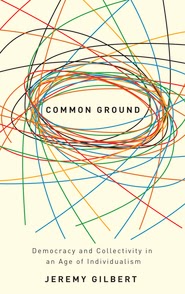
Commonalities: On Gilbert's Common Ground
Full disclosure: I met Jeremy Gilbert at a Deleuze
conference in Wales in the summer of 2008. He gave an interesting paper on
Deleuze, Guattari, and Gramsci and I ended up talking to him at pub. The
conversation was one of shared interests that went beyond Deleuze, it was a
Deleuze conference after all, to include Simondon, transindividuality, and the
broader problem of reimagining collectivity in individualistic (and
individuated) times. As anyone in academia knows, the experience of meeting
someone with shared interest is often ambivalent. There is the joy of finding
someone to talk to, of feeling less alone in the wilds of academia, coupled
with the sadness of feeling less original, less insightful. The latter feeling
is of course intensified by a publishing culture that is predicated less on
collective projects and more on developing a highly individuated name for
oneself. In the years since then, as our projects progressed (his made it toprint first) we joked about constituting a new school of thought,
Transindividual Ontology and Politics (TOP)?
Wednesday, January 01, 2014
What Does the University Say? On Macherey's La Parole Universitaire
The fundamental structure of Macherey’s book on the university is familiar to readers of his recent publications on “everyday life” and utopia, as well as anyone who has followed his website “Philosophe au sense large.” As with those works (and courses) a central idea or problem, in this case the idea of the university, is subject to a broad thematic investigation that encompasses philosophy (Kant, Hegel, Heidegger), sociology and psychoanalysis (Bourdieu and Lacan), and literature (Rabelais, Hardy, Nabokov). This is “philosophy in the largest” sense, to borrow the name of Macherey’s course; the different registers and disciplines and knowledge problematize and negate each other as much as they expand upon the central topic.
Tuesday, December 24, 2013
The Present as Conspiracy: Vaughn and Martin's The Private Eye
Brian Vaughn and Marcos Martin's The Private Eye is a web only comic that has a critical view of the internet. Set in the not too distant future, in the year 2076, it takes place in a time in which values regarding privacy and anonymity have been completely transformed, or "revalorized"--to use Nietzsche's terminology. Privacy is held as a sacred right, so much so that everyone has a secret identity, or several, and masks to wear when they go out in public. A generalized secret identity might seem like a critical take on the conventions of the superhero comic, but Vaughn and Martin's critical target is less the conventions of their medium than those of our world.
Sunday, December 15, 2013
Personalized Ideology (or Ideology Personified): Silva's Mood Economy
Do not demand of politics that it restore the “rights” of the individual, as philosophy has defined them. The individual is the product of power. What is needed is to “de-individualize’ by means of multiplication and displacement, diverse combinations. The group must not be the organic bond uniting hierarchized individuals, but a constant generation of de-individualization. Michel Foucault, Preface to Anti-Oedipus.
In the past few weeks I have returned again and again to the idea of "negative solidarity" that I outlined on this blog. I found myself mentally bookmarking news reports and articles that seem to be evidence of hostility to any collective organization for wages or benefits, not to mention larger or more structural transformations. The affect of ressentiment, the distinct sense that someone somewhere was benefiting at your expense, seemed prevalent. (Of course the "someones" in this situation are always those on social welfare programs, state employees, etc., never capitalists, investors, etc.) However, negative solidarity risked having all of the characteristics of what Althusser called a "descriptive theory," a sophisticated sounding recasting of what one already knows and thinks. The dangers of descriptive theories is that they provide a moment of recognition, ("That is it, dude; totally,")but no way to move forward. So the question which I returned to again, is how to account for the genesis and constitution of negative solidarity, how to move beyond description. This is a question of socio-political theory, but it is a necessary precondition of political action as well. Negative Solidarity is in that sense another name to the barrier of any politics whatsoever.
Friday, November 08, 2013
Economies of Affect/Affective Economies: Towards A Spinozist Critique of Political Economy
Presented at Historical Materialism London 2013
Antonio Negri argues that, “...in the postindustrial age the Spinozian critique of representation of capitalist power corresponds more to the truth than does the analysis of political economy.” Many of the contemporary turns to Spinoza in Marxist thought have followed this trajectory, turning away from the critique of political economy towards critiques of ideology or, in Negri’s case, the representation of power. This is perhaps not surprising, it is easier to make connections between Spinoza’s critique of superstition and theories of ideology than it is to connect his understanding of desires and striving to consumption and production. As much Spinoza offered a trenchant critique of the religious, monarchical, and even humanist ideologies of his time, he had little to say, at least directly, about the emerging capitalism. Money is only mentioned once in the Ethics, where it is defined as the universal object of desire that “occupies the mind of the multitude more than anything else” (EIVAPPXXVIII). While such a statement intersects with critiques of greed and the capitalist transformation of desire it remains to partial and incidental to developing a Spinozist critique of political economy.
Friday, November 01, 2013
What Would Hegel Do? Preliminary Remarks on the Problem of Action in the Phenomenology of Spirit
If one dispenses with all of the various reified and received ideas that frame almost any reading of Hegel's Phenomenology of Spirit then it is perhaps possible to see to what extent the idea of action repeats throughout the text as something of a refrain.
Thursday, October 24, 2013
The Production of Belief: From James to Lazzarato (and Back Again)
My approach to William James is necessarily oblique and eccentric. I am not a scholar of James or Pragmatism. My entire approach to James’ The Will to Believe is framed by a reference to it in the work of the post-autonomous thinker Maurizio Lazzarato. While such an approach is perhaps outside of the of James’ scholarship, the emphasis of on the shifting context as different philosophers and different historical moments is perhaps faithful to the spirit if not the letter of James’ writing. From this perspective philosophy is less a Kampfplatz, a particular battlefield between different positions, than a hall of mirrors in which the perspectives shift and change as time progresses.
Sunday, October 13, 2013
The Community of Those Who Cannot be Affected: On Lordon's La Société Des Affects
Frédéric Lordon's La Société des Affects: Pour un Structuralism des Passions is comprised of a series of essays which develop and expand upon his "energetic structuralism," his synthesis of regulation theory, Marx, and Spinoza developed in such works as Capitalisme, Désir, et Servitude: Marx et Spinoza. It is also a book that continues Lordon's interest in the intersection of philosophy and the social sciences, specifically Spinoza and political economy.
Friday, October 04, 2013
"The Only Thing That We Have In Common Is The Illusion of Being Together"*: Connecting with Don Jon
Joseph Gordon Levitt's first film, Don Jon is a surprisingly perplexing film. On the one hand it is one of the first mainstream films in the US to deal with internet porn, but, at the same time, it is not about porn, or even an addiction to porn. Its aspiration is use pornography as an allegory for something, but for what?
Sunday, September 29, 2013
"Look on my works, ye mighty, and despair!": Breaking Bad as Austerity Allegory
What follows should perhaps have the subtitle "Scattered Speculations on Breaking Bad" because it started as a post a few episodes into the final run and was finished after the penultimate episode. Edits were made along the way, but it is less a coherent essay taking into consideration the entire narrative arc of the last season than it is a series of observations as it unfolds. It is a bit long, and, if you have not seen the last season, spoiler alert.
Wednesday, September 11, 2013
Brutality Today: Brief Remark on Chamayou's Manhunts
When I first heard of the publication of the book, Manhunts: A Philosophical History it immediately occurred to me that it was the kind of book I would want to read. I have a well known obsession with The Most Dangerous Game and its various remakes. In fact if you place me in a room with at least two hunting trophies I will immediately start doing my impression of the rich bored hunter, claiming that "Man truly is the most dangerous game." So I knew that I would find the book interesting. What I could not initially understand is what the book would offer besides some rather dark trivia of man's inhumanity to man.
Sunday, September 08, 2013
Geeks Versus Hipsters: Scattered Speculations on the Affective Economy of Popular Culture
Image from The Private Eye by Brian K. Vaughn and Marcos Martin
There are two basic models of affective orientation towards popular culture. The first is the nerd, or more properly, the geek. I prefer the latter term because it shifts the focus away from content, comic books, sci-fi, etc, and towards the relationship of intense identification and pleasure; a relationship often summed up by the phrase "geek out."Framed in such a way the geek contrast nicely with the hipster, the latter is defined less by content, beards, bands from Brooklyn, etc., than by an affective relation of either irony or detachment. The hipster would not be caught dead wearing the band of the shirt that he is going to see, while the geek shows up at the convention in full costume of her favorite character.
Subscribe to:
Posts (Atom)