Wednesday, August 05, 2015

Sunday, June 21, 2015

The Stories We Tell: Event and Mythocracy


Let me begin with an observation that is perhaps obvious and an analysis that is a bit pedestrian (even more so than usual). The current political moment, what could be called the #blacklivesmatter moment in the US, is punctuated by particular events, the killing of black men by white police officers or other individuals: Trayvon Martin, Michael Brown, Eric Garner, Tamir Rice., etc.. Immediately after the event there is a struggle, waged in the media and in conversations, to make sense of and situate the event. 

Thursday, June 11, 2015

Naturally Historical: On Paolo Virno's When the Word Becomes Flesh and Déjà Vu and the End of History


Paolo Virno's philosophical trajectory is an interesting and strange one. He first became known to the English speaking world through The Grammar of the Multitude. This book's particular grammar, or rather vocabulary, defines  the central terms of post-autonomist thought, multitude, general intellect, Post-Fordism, etc., in a somewhat idiosyncratic manner. Marx and Spinoza are cited, but so are Aristotle, Sohn-Rethel, Heidegger, and Simondon. Virno has been drawn as much to the philosophical presuppositions and effect of these terms, of this new grammar, than to their economic basis or political implications. 

Thursday, May 21, 2015

Tales of Post-Apocalyptic Madness: On Subjectivity and Society in Mad Max


Mad Max perhaps invented the reboot. One of the most interesting things about the Mad Max films is the way in which the backstory has changed from film to film. Nuclear war is not even mentioned in the introductory voice over of The Road Warrior only to be included in the backstory of Mad Max Beyond Thunderdome. Mad Max: Fury Road changes the backstory as well, adding "the water wars," to the blood and fire that have made the apocalypse. It is possible to argue that each film reflects changing nature of apocalyptic fears, from gasoline shortages, to nuclear war, and finally to dwindling water supplies. We get the apocalypse we fear.

Tuesday, May 05, 2015

First Time as Tragedy, Second Time as Tragicomedy: On Better Call Saul


"Spinoff! Is there any word more thrilling to the human soul?" Troy McClure, The Simpsons

Better Call Saul confronts a series of hurdles in its first season. The first has to do with the low success rate of its specific lineage. Spinoffs have long been considered the lowest form of television entertainment. A position perhaps now occupied by reality shows, or, to be more precise spinoffs of reality shows. Better Call Saul stacks the odds against itself by combining the lowest form of television entertainment, the spinoff, with the lowest form of film, the prequel. While the spinoff is hated for its derivative nature prequels are not only derivative but deprived of at least the modicum of narrative uncertainty that would compel one to follow a plot. While viewers of Breaking Bad could be relatively certain that things would end badly for Walter White, there was at least the question of how he would meet his doom--cancer, Mexican Cartels, Hank Schrader, Jesse? Finding out how was half the fun. We know exactly how things will end for Saul Goodman. 

Thursday, April 09, 2015

From Desiring Production to Producing Desire: Between Anti-Oedipus and Lordon


Art by Fernando Vicente

Upon rereading and teaching Lordon's Capitalisme, Désir, et Servitude (or, as it is called in English, Willing Slaves of Capital) I was struck by certain productive similarities between the book and Deleuze and Guattari's Anti-Oedipus. These similarities are not of influence; Lordon is much more influenced by recent Spinozist thinkers such as Bove and Sévérac (even embracing the latter's critique of Deleuze) than he is by Deleuze's reading. Nor are the similarities of a shared point of reference, despite Deleuze and Guattari's invocation of Spinoza in the opening pages Anti-Oedipus is not a very Spinozist book. Rather the connection is one of a shared problem, or, more to the point it brings out particular elements of Deleuze and Guattari's book obscured by the '68 reading (what a crazy book!) or the more current, accelerationist interpretation.

Monday, March 16, 2015

Exceptions that Prove Rules: Lordon and Jaquet on Reproduction

The Working Class Goes to Heaven

Years ago, during my final year of graduate school, I taught a class at SUNY Cortland called "Race, Class, and Gender," or something to that effect. It was a required course meant to teach kids from Long Island and upstate New York about the reality of racial domination, capitalist exploitation, and sexist oppression. One student who hated the class turned in a paper that was just a list of names, everyone from Oprah Winfrey to Ellen Degeneres; her point was that this list, a list of prominent African Americans, women, and gays and lesbians, proved that racism, sexism, and class did not exist. It was not even a paper, just a list, but it reflects a way of thinking that is all too common. Anecdotal exceptions negate the reality of structures of domination and marginalization. 

Sunday, March 01, 2015

America: Love it or Hate it (Or, on emotional reductionism and the Politics of Affect)


I tried to avoid commenting on current events in this blog, blockbuster films, new books, new television shows, but not current events. However, Giuliani's recent remarks about Obama are only interesting to me because the seem to be another event in a general trajectory of what I would call, for lack of a better term, emotional reductionism. Emotional reductionism is the insistence that the only meaningful political distinctions are emotional ones, and those emotional distinctions boil down to love and hate. I can think of quite a few instances of this in recent years, they "hate us for our freedoms," they love death, etc.  Politics has become an affair of love or hate. 

Monday, February 16, 2015

Put a Drone on It: Chamayou's A Theory of the Drone

Image from Sleep Dealer 

Drones are having their cultural moment right now. They have appeared in such films from Interstellar to Captain America: Winter Soldier. While in the first film the drone's cameo appearance was used to shuffle in some post-Empire concerns (the drone was an Indian Surveillance drone), in the latter film drones do not directly appear but the the film deals with "drone anxiety." Drone anxiety is the fear that the very things that make drones strategically desirable--"precision targeting," low risk, and stealth, will make possible a massive centralization and automation of state power. (Sleep Dealer, pictured above, was ahead of the curve on this point). The unmanned ariel vehicle becomes synonymous with a breakdown of responsibility and centralization of control. In many cases the fear of the drone then just merges with fears of robots. In any case drones are hot, and the war on terror is not (or at least less so). 

Saturday, January 31, 2015

Screening Infra-Ideology: On American Sniper

American Sniper: Starring Bradley Cooper and a really fake baby

It seems wrong to call American Sniper ideological in the traditional sense of the word. Racist yes, but ideological no. It only pays the most facile lip service to anything like a justification for the war in Iraq, "fighting them there versus fighting them here" is mentioned but hardly developed as an argument. It is perhaps best understood to function at the level of what Pierre Macherey calls "infra-ideology," ideology that functions at the level of norms, comportments and practices rather than beliefs. The point of Chris Kyle is not that he believes, or what he believes, but his physical dedication, his manliness. 

Thursday, January 22, 2015

Class Structure: On Bidet's Foucault Avec Marx


For reasons that are as much historical as they are philosophical the relation between the thought of Foucault and Marx has become a topic of inquiry again. There are multiple versions of this question, from Macherey's investigations into the concept of "norms" as a central aspect of capitalist society and social relations, to questions about Foucault's interest in neoliberalism. A question that was generally considered decided in past generations has been reopened in multiple ways, running the gambit from the speculative to political. Jacques Bidet's Foucault avec Marx adds what could be considered a structural dimension to this question. 

Friday, January 02, 2015

The Class Struggle at Home: Jaquet's Les Transclasses


Perhaps the best way to approach Chantal Jaquet's Les Transclasses: ou la non-reproduction is by situating it between two caricatures of intellectual positions. On the one hand, the left one, we have studies of the "reproduction of the relations of production," the work of Bourdieu most importantly, but also Althusser, that stresses how the classes endlessly reproduce themselves, or are reproduced by the institutions of schools, media, and so on. On the other hand, the right one, we have the various theories of the culture of poverty, and more importantly, various "pulled up by bootstraps" narratives, all of which stress that individual will and fortitude can overcome all socio-economic barriers. On the one hand there is a theory of the necessary reproduction of the relations of production, while on the other there is the entire anecdotal history of exceptions.

Friday, December 12, 2014

The Ideology of Norms: On Macherey's Le Sujet des Normes


What does it mean to be subjected to norms, or, more to the point, to be a subject whose very existence is constituted in and through norms. This is the question of Macherey's Le Suject des Normes. While sections of this book have appeared in some form on his Philosophe au sens large website, this is a book very much unlike many of the past books on "everyday life," "the university," and "utopia." Those books were more like seminars--examinations of a central problem through a series of philosophical, literary, and sociological texts--this book is an intervention. It intervenes in a field of problems that is both old, returning Macherey to Althusser and to Marx, and contemporary, asking the fundamental question of contemporary society, of a society which has given up any grand narratives, or dominant ideology, but functions all the more efficiently through protocols and norms of action. 

Sunday, November 16, 2014

Paying Attention in an Age of Distraction: On Yves Citton's Pour Une Écologie de l'Attention


Yves Citton's Pour une Écologie de l'Attention is something of a companion volume to L’Économie de l’attention. Nouvel horizon du capitalisme? a book edited by Citton. Many of the essays in the latter cite the former. However, the different titles, and the question mark in the latter suggest a divergence around a central question. Both books work from the central provocation that we are living through a profound mutation in the nature of attention, never have we had so many distractions or devices soliciting our attention. What remains in question is first whether or not this transformation is best of all understood as a new economy of attention? Terms such as "paying," "cost," and "investment" regularly suggest themselves when it comes to discussing attention. Attention appears as a scarce resource and it is quite easy to speak of losses and gains when it comes to attention, as every moment spent reading tweets is not spent reading books. The more important question is whether or not attention can be understood as an economy of sorts, but whether we have entered a new phase of capitalism in which attention itself is productive of value. Metaphor meets mode of production.

Sunday, November 09, 2014

Ends of Man: Cynicism and Sentiment in Nightcrawler and Interstellar


OK. I am going to make this quick. I saw two films this weekend, Nightcrawler and Interstellar,  and since I am me, many people expected me to blog about them. I am way too busy for such things, but like Louis Bloom (Tiqqun reference?) pictured above, I aim to please my fans and my own craven ego, I thought that I would try a quick post wrapping up my impressions of both films. 

Sunday, October 26, 2014

Rewiring Genre: On Linda Williams' On The Wire


Like many fans of The Wire I have a fantasy of re-watching the entire series from beginning until the end. It is something that I will do someday, once I can clear my schedule enough for multiple nights on end of three hours plus of watching. Until then reading something like Linda Williams’ On The Wire is perhaps the next best thing. It makes it possible to revisit the series without revisiting the trials and tribulations of binge watching.

Thursday, October 09, 2014

Breaking with Breaks: Or, Reading Capital 2 Electric Boogaloo


Pierre Dardot and Christian Laval's Marx, Prénom: Karl is yet another attempt to take stock of the work of Marx. As the title suggests, this book is an attempt to get beyond the myth of Marx, the Grandeur of Marx; t it does so not through the biography of the man named Karl, but through the question of Marx's relations to its sources.  (The title is a bid odd, and I can't help but think of James Bond every time I glance at it."Marx, Karl Marx") 

Friday, September 26, 2014

Intellectual Firmament: From Censorship to Attention

First, a note about teaching. Teaching undergraduates, especially teaching introductory classes or classes that fulfill general education requirements, often leads to a strange kind of double speak in which texts that are more "teachable," more appropriate to general audiences, become the basis to address other points raised by more difficult and demanding texts.

Thursday, August 21, 2014

Dialectics of the Other Other Scene: On Balibar and Macherey (with apologies to Kanye)


"Last week I was in my other other Benz"--Kanye West

While I would never want to reduce the work of Etienne Balibar and Pierre Macherey to simply being that of "students of Althusser," there is a certain way in which their work continues certain themes and problems from the latter's work. This can be seen not only in the topics chosen, the studies on Marx and Spinoza, but, as I am going to examine here, with a certain reworking of the question of the dialectic.


Friday, August 08, 2014

Taking Form: Morfino and Zourbachvili Encounter Spinoza


The translation of Vittorio Morfino's Plural Temporality: Transindividuality and the Aleatory Between Spinoza and Althusser deserves to be considered an event in its own right. Morfino is not very well known in the Anglo-American world, but those who have heard him speak at the annual Historical Materialism conference in London know how important his work is to Marxism, Spinoza, and materialism more broadly. Morfino has the rather singular talent of drawing together seemingly incongruous streams of thought into relation. Morfino is not to content to remain with the apparent points of opposition, nor does he simply declare some secret unity between disparate thinkers. In one of my favorite conference presentations, I remember Morfino declaring that the presence of Spinoza in Marx's thought was nothing but a "scholarly residue," the notebooks on the Tractatus Theologico-Politicus and other references nothing more than the dutiful work of a German philosopher in the 19th century, but that this of course makes the connection between Marx and Spinoza interesting. Since the contours of this connection cannot not be found in the typical anxiety of influence, it can only be invented in connections and relations of tendencies and presuppositions. (For examples of this invention of the Marx/Spinoza encounter see Negri, Lordon, Fischbach, etc.) 

Friday, July 11, 2014

War Has Already Begun: On Dawn of the Planet of the Apes


There is by now a predictable seasonable distribution of Hollywood films. Not only are special effects blockbusters released in the summer, and awards bait prestige films released in the fall, but those seasonal divisions are further gradated to the point where every summer begins with a few contenders in May, peaks in July with the biggest explosion of effects and stars, and tapers off into a series of remakes and more dubious summer properties in August. Whereas past generations had their divisions of A and B pictures, we have May films and August films. Rise of the Planet of the Apes was one such August film, a remake/reboot of a lesser known entry of a mostly forgotten series, it managed to surprise many in actually being more interesting than one would have expected and more entertaining than one hoped.  The release of its sequel, Dawn of the Planet of the apes in July then signifies something of increased brand visibility if not increased quality.

Thursday, July 03, 2014

Hijacking a Train: Revolution and its Limits in Snowpiercer


I scrupulously avoided reading any reviews of Snowpiercer once I became intrigued by the basic premise. Despite this, and not reading anything after seeing it this afternoon, I was aware, in that way we become aware of things through an almost social media osmosis, that it was quickly being heralded as a new film about the 99% and the 1%, about social inequality, and, more importantly, about revolution. In what follows I would like to explore these allegories for at least two reasons. The first, and most basic, is that the film openly invites such readings. Its particular premise, the Earth is frozen after a failed attempt to solve global warming and all of the survivors are left stranded on globe circling train, is so thin in terms of any pretense at credibility, and so packed with allusions and images, I am not sure it is even possible to watch it as "just a movie." Second, and more importantly I am interested in what it means to make or interpret a film as allegory of the present, recognizing of course that the line between making and interpreting can never be rigidly defined. (Spoilers follow)

Tuesday, July 01, 2014

Men without Qualities: Spinoza, Marx, Balibar and Philosophical Anthropology


This post is an attempt to draw together two different philosophical precursors to Balibar's philosophical anthropology. That Spinoza and Marx are the precursors in question is news to no one, at least no one familiar with Balibar's work, and yet the particular way they intersect, extend, or complicate each other is often unexamined. Examining them will help develop both the promise and limits of Balibar's philosophical anthropology, as well as set it apart from other philosophical anthopologies after the death of man.

Thursday, June 19, 2014

Workers without Work: Vonnegut's Player Piano and the Fragment on Machines


In a great little text on the "Fragment on Machines" Paolo Virno makes a comparison between Marx's text and the versus of scripture cited by heroes in Westerns. As Virno states, these scripture verses were cited in such a way that they always seemed appropriate, their meaning shifting with every context. (A more contemporary example of this situational hermeneutic can be found in Pulp Fiction in the scene in which Jules reconsiders his particular scriptural fragment.) As Virno argues the "Fragment on Machines" has been used to develop various theoretical positions, from a critique of the supposed neutrality of scientific knowledge, to the "end of work," only to become, through Virno's work and others, a foundational text in formulating the "general intellect" as a productive force and basis for a new collective subjectivity. 

Thursday, June 12, 2014

Subjectification, Individuation, and Politics: On Bernard Aspe's Simondon, Politique du Transindividuel

I am going to refrain from beginning this review by pointing out the similarities between Aspe's Simondon, Politique du transindividuel and the manuscript I am currently finishing. Suffice to say I am glad that this book was published towards the end of working on the book, when the differences between my perspective and his can only refine the conclusion and revisions, and not at the beginning of conceiving of the project, when its very existence would put the whole thing into jeopardy. Reading the book can thus be considered an example of the standard practice of transindividuation--the simultaneous constitution of a group of people interested in the same sets of questions and thinkers and of a unique perspective on those questions.

Monday, May 19, 2014

Books are from Mars, Movies are from Venus: Anthropological Difference in Under the Skin (the book and movie)


A few weeks ago I saw the film Under the Skin, a film that was better than I expected. The film unnerved me in a way that made it difficult to forget. The film is minimalist in dialogue, evocative in its use of images, and ambivalent in its overall meaning. Its basic plot concerns what is ostensibly an alien in human form (played by Scarlett Johansson), who travels around the Scottish countryside picking up men and…eating them? It really is unclear in all of the details of this alien on earth, there is no voiceover exposition, no scientist who figures it all out, just a series of scenes of uneasy seduction.

Saturday, May 17, 2014

The Affective Economy: Producing and Consuming Affects in Deleuze and Guattari


Erasmus University Rotterdam

The thought of Gilles Deleuze (and Félix Guattari) bears on ambiguous relation with respect to the “affective turn” in social and political thought that it supposedly helped initiate. This ambiguity touches on the very role and meaning of affects. From Deleuze’s writings on Nietzsche and Spinoza through the collaborations of Capitalism and Schizophrenia, Deleuze and Guattari insist on the central role of the affects, joy, sadness, fear, and hope, as structuring individual and collective life. In that sense, Deleuze and Guattari are rightfully hailed as central figures in a turn towards affect. However, if, as some argue, the “affective turn” is a turn towards the lived over the structural and the intimate over the public, then Deleuze and Guattari’s thought has a much more complex relation to affects. The broader polemical target of Deleuze and Guattari’s Anti-Oedipus, beyond the specific polemics with psychoanalysis, is any explanatory theory that would reduce social relations to expressions of individual passions and desires. Deleuze and Guattari’s claim that there is only “the desire and the social, and nothing else” is oriented against such individualistic accounts of subjectivity. Moreover, Deleuze and Guattari define capitalism as a socius that it reproduces itself in and through the encounter of abstract quantities of money and labor power, and as such is  is indifferent to the beliefs, feelings, and meaning that we attach to it. Thus, if affect is central to Deleuze and Guattari’s thought it is necessary to add the caveats that affect must be thought of as anti-individualistic, as social rather than intimate, and as impersonal, reflecting the abstractions that dominant life. 

Sunday, April 13, 2014

Abstract Materialism: Sohn-Rethel and the Task of a Materialist Philosophy Today


This is the longer version of an old conference paper. It never quite became publishable; it is left here to the gnawing criticism of digital mice.

Materialism has always been the bastard stepson of philosophy. Its very position is paradoxical, if not impossible. It must use concepts and arguments to conceptualize and argue against the primacy of concepts and argument. This perennial problem is even worse today. If Marx was in some sense the most sophisticated materialist philosopher, elevating the material beyond the brute materiality of the body, to locate the material in the reality of production and the conflicted terrain of social relations, then one could argue that even this version of materialism is in jeopardy today. The economy, the last instance of materialist philosophy after Marx, can no longer be identified with the machines and noise of the factory, it has become digital, immaterial. What then remains of materialism when the economy has become ideal, determined more and more by the idealist category par excellence, speculation, and even labor has been declared immaterial, intersecting with beliefs and desires? At least the beginning of a response can be found in the seemingly paradoxical concept of “real abstraction.” This term, introduced by Marx, takes on a central importance in the work of Alfred Sohn-Rethel, where it is no longer a methodological necessity, but the cornerstone of a philosophy that seeks to understand the material basis of abstraction itself.

Saturday, March 22, 2014

Affect and/or Emotions: Differentiation or Dialectic


Theories of affect tend to articulate the term affect in relation to some idea of emotion. Perhaps the locus classicus of this distinction is to be found in Brian Massumi's work on affect. As Massumi writes,

"An emotion is a subjective content, the sociolinguistic fixing of the quality of an experience, which is from that point onward defined as personal. Emotion is qualified intensity, the conventional consensual point of insertion of into intensity into semantically and semiotically formed progressions, into narrativizable action-reaction circuits, into function and meaning. It is owned and recognized. It is crucial to theorize the difference between affect and emotion."

Thursday, March 13, 2014

Life During Wartime: Remarks on The Americans


I was initially surprised to learn that FX had developed a show about KGB sleeper agents, more so when I learned it is something of a hit. In retrospect I should not have been so surprised; the anti-hero had become such a staple of "long form television" that KGB agents are no more surprising subjects for a show than mobsters, bootleggers, advertising executives, serial killers, and drug kingpins. KGB agents could be considered to be yet another variant of the popular sociopath. Thus, a show about KGB agents does not suggest some kind of immediate revision of cold war history and propaganda, but it does revisit a period of recent history.

Saturday, March 01, 2014

Utopia Now: on Pierre Macherey's De L'Utopie!


Pierre Macherey’s De L’Utopie! follows a pattern similar to his other books that have come out of his "philosophie au sense large" seminars. As with other seminars, what is stake is the tracing of a concept or idea, that of the university, the quotidian, or, in this case, utopia, is less a matter of producing a definitive interpretation of the concept in question than it is of exploring the idea in its essential errancy and historicity. Whereas Macherey’s other books included in their trajectory a survey of philosophical, sociological or psychological works, and literature, De L’Utopia is concerned with that particular genre of writing that defines utopia. Although Macherey does consider various theories of utopia, and includes an appendix on Brecht’s opera the Rise and Fall of the City of Mahoganny, his primary concern is the particular form of writing that defines utopia. There is no need to contrast philosophical theories and literary texts because this tension of the philosophical, or sociological, and the literary is internal to utopian writing itself. 

Thursday, February 13, 2014

We Can Remake Him: Robocop Redux


It seems fair to begin this review with a confession as to why I love the original Robocop. It has as much to do with how I saw it as with its satirical take on corporations and American politics. I snuck in, or, more precisely, my father snuck my brother and I in. We were on vacation in Maine for the summer and one rainy day forced us to see a movie (Although I must confess the rainy day movies were as much a highlight of summer vacations growing up as hikes and rafting trips). We picked the godawful Jaws: The Revenge and just as we were walking out, the sounds of a shark that roared still ringing in our ears, my father turned to my brother and I, whispered "they owe us," and escorted us into another screen in the multiplex. This always struck me as appropriate: Robocop snuck its satire into a sci-fi action premise, and we snuck into see it. 

Saturday, February 01, 2014

Divisions: Theorizations and Repudiations of the Division of Mental and Manual Labor


If there was a column listing the what is hot and what is not of contemporary Marxism (and why shouldn't there be?), then the division of mental and manual labor would definitely be in the "not" column. There are multiple reasons for this not the least of which is that the division, especially as it was developed into "the separation of execution from conception," was identified with the factories of Taylorism and Fordism. The separation of mental and manual labor was something that our age, an age of "immaterial labor" or "cognitive capitalism" was supposed to have surpassed.

Sunday, January 12, 2014

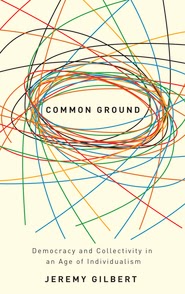
Commonalities: On Gilbert's Common Ground


Full disclosure: I met Jeremy Gilbert at a Deleuze conference in Wales in the summer of 2008. He gave an interesting paper on Deleuze, Guattari, and Gramsci and I ended up talking to him at pub. The conversation was one of shared interests that went beyond Deleuze, it was a Deleuze conference after all, to include Simondon, transindividuality, and the broader problem of reimagining collectivity in individualistic (and individuated) times. As anyone in academia knows, the experience of meeting someone with shared interest is often ambivalent. There is the joy of finding someone to talk to, of feeling less alone in the wilds of academia, coupled with the sadness of feeling less original, less insightful. The latter feeling is of course intensified by a publishing culture that is predicated less on collective projects and more on developing a highly individuated name for oneself. In the years since then, as our projects progressed (his made it toprint first) we joked about constituting a new school of thought, Transindividual Ontology and Politics (TOP)?

Wednesday, January 01, 2014

What Does the University Say? On Macherey's La Parole Universitaire


The fundamental structure of Macherey’s book on the university is familiar to readers of his recent publications on “everyday life” and utopia, as well as anyone who has followed his website “Philosophe au sense large.” As with those works (and courses) a central idea or problem, in this case the idea of the university, is subject to a broad thematic investigation that encompasses philosophy (Kant, Hegel, Heidegger), sociology and psychoanalysis (Bourdieu and Lacan), and literature (Rabelais, Hardy, Nabokov). This is “philosophy in the largest” sense, to borrow the name of Macherey’s course; the different registers and disciplines and knowledge problematize and negate each other as much as they expand upon the central topic. 

Tuesday, December 24, 2013

The Present as Conspiracy: Vaughn and Martin's The Private Eye


Brian Vaughn and Marcos Martin's The Private Eye is a web only comic that has a critical view of the internet. Set in the not too distant future, in the year 2076, it takes place in a time in which values regarding privacy and anonymity have been completely transformed, or "revalorized"--to use Nietzsche's terminology. Privacy is held as a sacred right, so much so that everyone has a secret identity, or several, and masks to wear when they go out in public. A generalized secret identity might seem like a critical take on the conventions of the superhero comic, but Vaughn and Martin's critical target is less the conventions of their medium than those of our world. 

Sunday, December 15, 2013

Personalized Ideology (or Ideology Personified): Silva's Mood Economy


Do not demand of politics that it restore the “rights” of the individual, as philosophy has defined them. The individual is the product of power. What is needed is to “de-individualize’ by means of multiplication and displacement, diverse combinations. The group must not be the organic bond uniting hierarchized individuals, but a constant generation of de-individualization.  Michel Foucault, Preface to Anti-Oedipus. 

In the past few weeks I have returned again and again to the idea of "negative solidarity" that I outlined on this blog. I found myself mentally bookmarking news reports and articles that seem to be evidence of hostility to any collective organization for wages or benefits, not to mention larger or more structural transformations. The affect of ressentiment, the distinct sense that someone somewhere was benefiting at your expense, seemed prevalent. (Of course the "someones" in this situation are always those on social welfare programs, state employees, etc., never capitalists, investors, etc.) However, negative solidarity risked having all of the characteristics of what Althusser called a "descriptive theory," a sophisticated sounding recasting of what one already knows and thinks. The dangers of descriptive theories is that they provide a moment of recognition, ("That is it, dude; totally,")but no way to move forward. So the question which I returned to again, is how to account for the genesis and constitution of negative solidarity, how to move beyond description. This is a question of socio-political theory, but it is a necessary precondition of political action as well.  Negative Solidarity is in that sense another name to the barrier of any politics whatsoever. 

Friday, November 08, 2013

Economies of Affect/Affective Economies: Towards A Spinozist Critique of Political Economy


Presented at Historical Materialism London 2013 

Antonio Negri argues that, “...in the postindustrial age the Spinozian critique of representation of capitalist power corresponds more to the truth than does the analysis of political economy.” Many of the contemporary turns to Spinoza in Marxist thought have followed this trajectory, turning away from the critique of political economy towards critiques of ideology or, in Negri’s case, the representation of power. This is perhaps not surprising, it is easier to make connections between Spinoza’s critique of superstition and theories of ideology than it is to connect his understanding of desires and striving to consumption and production. As much Spinoza offered a trenchant critique of the religious, monarchical, and even humanist ideologies of his time, he had little to say, at least directly, about the emerging capitalism. Money is only mentioned once in the Ethics, where it is defined as the universal object of desire that “occupies the mind of the multitude more than anything else” (EIVAPPXXVIII). While such a statement intersects with critiques of greed and the capitalist transformation of desire it remains to partial and incidental to developing a Spinozist critique of political economy. 

Friday, November 01, 2013

What Would Hegel Do? Preliminary Remarks on the Problem of Action in the Phenomenology of Spirit


If one dispenses with all of the various reified and received ideas that frame almost any reading of Hegel's Phenomenology of Spirit then it is perhaps possible to see to what extent the idea of action repeats throughout the text as something of a refrain.

Thursday, October 24, 2013

The Production of Belief: From James to Lazzarato (and Back Again)


My approach to William James is necessarily oblique and eccentric. I am not a scholar of James or Pragmatism. My entire approach to James’ The Will to Believe is framed by a reference to it in the work of the post-autonomous thinker Maurizio Lazzarato. While such an approach is perhaps outside of the of James’ scholarship, the emphasis of on the shifting context as different philosophers and different historical moments is perhaps faithful to the spirit if not the letter of James’ writing. From this perspective philosophy is less a Kampfplatz, a particular battlefield between different positions, than a hall of mirrors in which the perspectives shift and change as time progresses. 

Sunday, October 13, 2013

The Community of Those Who Cannot be Affected: On Lordon's La Société Des Affects


Frédéric Lordon's La Société des Affects: Pour un Structuralism des Passions is comprised of a series of essays which develop and expand upon his "energetic structuralism," his synthesis of regulation theory, Marx, and Spinoza developed in such works as Capitalisme, Désir, et Servitude: Marx et Spinoza.  It is also a book that continues Lordon's interest in the intersection of philosophy and the social sciences, specifically Spinoza and political economy. 

Friday, October 04, 2013

"The Only Thing That We Have In Common Is The Illusion of Being Together"*: Connecting with Don Jon


Joseph Gordon Levitt's first film, Don Jon is a surprisingly perplexing film. On the one hand it is one of the first mainstream films in the US to deal with internet porn, but, at the same time, it is not about porn, or even an addiction to porn. Its aspiration is use pornography as an allegory for something, but for what?

Sunday, September 29, 2013

"Look on my works, ye mighty, and despair!": Breaking Bad as Austerity Allegory


What follows should perhaps have the subtitle "Scattered Speculations on Breaking Bad" because it started as a post a few episodes into the final run and was finished after the penultimate episode. Edits were made along the way, but it is less a coherent essay taking into consideration the entire narrative arc of the last season than it is a series of observations as it unfolds. It is a bit long, and, if you have not seen the last season, spoiler alert.

Wednesday, September 11, 2013

Brutality Today: Brief Remark on Chamayou's Manhunts


When I first heard of the publication of the book, Manhunts: A Philosophical History it immediately occurred to me that it was the kind of book I would want to read. I have a well known obsession with The Most Dangerous Game and its various remakes. In fact if you place me in a room with at least two hunting trophies I will immediately start doing my impression of the rich bored hunter, claiming that "Man truly is the most dangerous game." So I knew that I would find the book interesting. What I could not initially understand is what the book would offer besides some rather dark trivia of man's inhumanity to man. 

Sunday, September 08, 2013

Geeks Versus Hipsters: Scattered Speculations on the Affective Economy of Popular Culture

Image from The Private Eye by Brian K. Vaughn and Marcos Martin

There are two basic models of affective orientation towards popular culture. The first is the nerd, or more properly, the geek. I prefer the latter term because it shifts the focus away from content, comic books, sci-fi, etc, and towards the relationship of intense identification and pleasure; a relationship often summed up by the phrase "geek out."Framed in such a way the geek contrast nicely with the hipster, the latter is defined less by content, beards, bands from Brooklyn, etc., than by an affective relation of either irony or detachment. The hipster would not be caught dead wearing the band of the shirt that he is going to see, while the geek shows up at the convention in full costume of her favorite character.

Saturday, August 17, 2013

How Not to do Dystopia in a Dystopia: A Brief remark on Elysium


In an instance of "first time as protest, second time as product" Elysium has been described as a movie of the 99%, a film that expresses the same sentiments as Occupy Wall Street. I think that this is accurate, but not in the way it is meant. What Elysium expresses is not some radical message in the trojan horse of a late summer blockbuster, even less some kind of Marxism, but the limits of the populist imaginary of the Occupy moment.

Wednesday, June 12, 2013

Please Stand By: Or, Print Killed the Blogosphere Star


Dear friends, readers, and people who ended up here by poorly formulated search terms:

In order to complete a long overdue book project I will put my blog on hold for at least the remainder of the summer. As much as I would love to offer reviews of summer blockbusters,  the various books that I have read, and weigh in on current economic and political crises, all to the delight of dozens, I have to focus my writing energy and time on the book. So, for the summer I am eschewing the digital and its short term gratifications for print and its long term frustrations. My tentative schedule is to return at the end of Breaking Bad, because I really cannot resist writing about that. Thanks for reading. In case you are curious, I have posted a somewhat dated version of the prospectus of the book, which I am completing for Historical Materialism, below. 

Wednesday, May 22, 2013

We are all Neoliberals: Dardot and Laval's La Nouvelle Raison du Monde


Neoliberalism has become an increasingly popular word in contemporary critical thought and philosophy. Its popularity has come at a cost, however, as the meaning of the word has been reduced to a few vague inclinations about the truly bad kind of capitalism held together by invocations of competition, markets, and individualism. It has become what Althusser called a descriptive theory at best, and, at worse, a way to speak about capitalism without speaking about capitalism. In the worse case it became the name for a kind of nostalgia for an earlier kinder and gentler capitalism, one that we could get back to as soon as the full impact of the recession was felt and people started really paying attention to Paul Krugman. 

Sunday, May 05, 2013

Untenable Subtexts: Iron Man Three


Having written something about the first two Iron Man films on this blog in the past I felt obligated to write at least something about the third. My thoughts on this film are framed by Hassler Forest's assertion that the superhero film is a post 9/11 cultural form; the genre not only emerges after that historical event but it provides sufficient fantasy difference to confront both historical trauma and to legitimate the emerging national security state. It makes large scale destruction, often of New York, palatable and, more importantly, it makes generalized surveillance and extra-judicial forms of enforcement not only acceptable, but cool.