This post is an attempt to draw together two different philosophical precursors to Balibar's philosophical anthropology. That Spinoza and Marx are the precursors in question is news to no one, at least no one familiar with Balibar's work, and yet the particular way they intersect, extend, or complicate each other is often unexamined. Examining them will help develop both the promise and limits of Balibar's philosophical anthropology, as well as set it apart from other philosophical anthopologies after the death of man.
Tuesday, July 01, 2014
Thursday, June 19, 2014
Workers without Work: Vonnegut's Player Piano and the Fragment on Machines
In a great little text on the "Fragment on Machines" Paolo Virno makes a comparison between Marx's text and the versus of scripture cited by heroes in Westerns. As Virno states, these scripture verses were cited in such a way that they always seemed appropriate, their meaning shifting with every context. (A more contemporary example of this situational hermeneutic can be found in Pulp Fiction in the scene in which Jules reconsiders his particular scriptural fragment.) As Virno argues the "Fragment on Machines" has been used to develop various theoretical positions, from a critique of the supposed neutrality of scientific knowledge, to the "end of work," only to become, through Virno's work and others, a foundational text in formulating the "general intellect" as a productive force and basis for a new collective subjectivity.
Thursday, June 12, 2014
Subjectification, Individuation, and Politics: On Bernard Aspe's Simondon, Politique du Transindividuel
I am going to refrain from beginning this review by pointing out the similarities between Aspe's Simondon, Politique du transindividuel and the manuscript I am currently finishing. Suffice to say I am glad that this book was published towards the end of working on the book, when the differences between my perspective and his can only refine the conclusion and revisions, and not at the beginning of conceiving of the project, when its very existence would put the whole thing into jeopardy. Reading the book can thus be considered an example of the standard practice of transindividuation--the simultaneous constitution of a group of people interested in the same sets of questions and thinkers and of a unique perspective on those questions.
Monday, May 19, 2014
Books are from Mars, Movies are from Venus: Anthropological Difference in Under the Skin (the book and movie)
A few weeks ago I saw the film Under the Skin, a film that
was better than I expected. The film unnerved me in a way that made it
difficult to forget. The film is minimalist in dialogue, evocative in its use
of images, and ambivalent in its overall meaning. Its basic plot concerns what
is ostensibly an alien in human form (played by Scarlett Johansson), who
travels around the Scottish countryside picking up men and…eating them? It
really is unclear in all of the details of this alien on earth, there is no
voiceover exposition, no scientist who figures it all out, just a series of
scenes of uneasy seduction.
Saturday, May 17, 2014
The Affective Economy: Producing and Consuming Affects in Deleuze and Guattari
Erasmus
University Rotterdam
The thought of Gilles Deleuze (and Félix Guattari) bears on ambiguous relation with respect to the “affective turn” in social and political thought that it supposedly helped initiate. This ambiguity touches on the very role and meaning of affects. From Deleuze’s writings on Nietzsche and Spinoza through the collaborations of Capitalism and Schizophrenia, Deleuze and Guattari insist on the central role of the affects, joy, sadness, fear, and hope, as structuring individual and collective life. In that sense, Deleuze and Guattari are rightfully hailed as central figures in a turn towards affect. However, if, as some argue, the “affective turn” is a turn towards the lived over the structural and the intimate over the public, then Deleuze and Guattari’s thought has a much more complex relation to affects. The broader polemical target of Deleuze and Guattari’s Anti-Oedipus, beyond the specific polemics with psychoanalysis, is any explanatory theory that would reduce social relations to expressions of individual passions and desires. Deleuze and Guattari’s claim that there is only “the desire and the social, and nothing else” is oriented against such individualistic accounts of subjectivity. Moreover, Deleuze and Guattari define capitalism as a socius that it reproduces itself in and through the encounter of abstract quantities of money and labor power, and as such is is indifferent to the beliefs, feelings, and meaning that we attach to it. Thus, if affect is central to Deleuze and Guattari’s thought it is necessary to add the caveats that affect must be thought of as anti-individualistic, as social rather than intimate, and as impersonal, reflecting the abstractions that dominant life.
Sunday, April 13, 2014
Abstract Materialism: Sohn-Rethel and the Task of a Materialist Philosophy Today
This is the longer version of an old conference paper. It never quite became publishable; it is left here to the gnawing criticism of digital mice.
Materialism has always been the bastard stepson of philosophy. Its very position is paradoxical, if not impossible. It must use concepts and arguments to conceptualize and argue against the primacy of concepts and argument. This perennial problem is even worse today. If Marx was in some sense the most sophisticated materialist philosopher, elevating the material beyond the brute materiality of the body, to locate the material in the reality of production and the conflicted terrain of social relations, then one could argue that even this version of materialism is in jeopardy today. The economy, the last instance of materialist philosophy after Marx, can no longer be identified with the machines and noise of the factory, it has become digital, immaterial. What then remains of materialism when the economy has become ideal, determined more and more by the idealist category par excellence, speculation, and even labor has been declared immaterial, intersecting with beliefs and desires? At least the beginning of a response can be found in the seemingly paradoxical concept of “real abstraction.” This term, introduced by Marx, takes on a central importance in the work of Alfred Sohn-Rethel, where it is no longer a methodological necessity, but the cornerstone of a philosophy that seeks to understand the material basis of abstraction itself.
Saturday, March 22, 2014
Affect and/or Emotions: Differentiation or Dialectic
Theories of affect tend to articulate the term affect in relation to some idea of emotion. Perhaps the locus classicus of this distinction is to be found in Brian Massumi's work on affect. As Massumi writes,
"An emotion is a subjective content, the sociolinguistic fixing of the quality of an experience, which is from that point onward defined as personal. Emotion is qualified intensity, the conventional consensual point of insertion of into intensity into semantically and semiotically formed progressions, into narrativizable action-reaction circuits, into function and meaning. It is owned and recognized. It is crucial to theorize the difference between affect and emotion."
Thursday, March 13, 2014
Life During Wartime: Remarks on The Americans
I was initially surprised to learn that FX had developed a show about KGB sleeper agents, more so when I learned it is something of a hit. In retrospect I should not have been so surprised; the anti-hero had become such a staple of "long form television" that KGB agents are no more surprising subjects for a show than mobsters, bootleggers, advertising executives, serial killers, and drug kingpins. KGB agents could be considered to be yet another variant of the popular sociopath. Thus, a show about KGB agents does not suggest some kind of immediate revision of cold war history and propaganda, but it does revisit a period of recent history.
Saturday, March 01, 2014
Utopia Now: on Pierre Macherey's De L'Utopie!
Pierre Macherey’s De L’Utopie! follows a pattern similar to his other books that have come out of his "philosophie au sense large" seminars. As with other seminars, what is stake is the tracing of a concept or idea, that of the university, the quotidian, or, in this case, utopia, is less a matter of producing a definitive interpretation of the concept in question than it is of exploring the idea in its essential errancy and historicity. Whereas Macherey’s other books included in their trajectory a survey of philosophical, sociological or psychological works, and literature, De L’Utopia is concerned with that particular genre of writing that defines utopia. Although Macherey does consider various theories of utopia, and includes an appendix on Brecht’s opera the Rise and Fall of the City of Mahoganny, his primary concern is the particular form of writing that defines utopia. There is no need to contrast philosophical theories and literary texts because this tension of the philosophical, or sociological, and the literary is internal to utopian writing itself.
Thursday, February 13, 2014
We Can Remake Him: Robocop Redux
It seems fair to begin this review with a confession as to why I love the original Robocop. It has as much to do with how I saw it as with its satirical take on corporations and American politics. I snuck in, or, more precisely, my father snuck my brother and I in. We were on vacation in Maine for the summer and one rainy day forced us to see a movie (Although I must confess the rainy day movies were as much a highlight of summer vacations growing up as hikes and rafting trips). We picked the godawful Jaws: The Revenge and just as we were walking out, the sounds of a shark that roared still ringing in our ears, my father turned to my brother and I, whispered "they owe us," and escorted us into another screen in the multiplex. This always struck me as appropriate: Robocop snuck its satire into a sci-fi action premise, and we snuck into see it.
Saturday, February 01, 2014
Divisions: Theorizations and Repudiations of the Division of Mental and Manual Labor
If there was a column listing the what is hot and what is not of contemporary Marxism (and why shouldn't there be?), then the division of mental and manual labor would definitely be in the "not" column. There are multiple reasons for this not the least of which is that the division, especially as it was developed into "the separation of execution from conception," was identified with the factories of Taylorism and Fordism. The separation of mental and manual labor was something that our age, an age of "immaterial labor" or "cognitive capitalism" was supposed to have surpassed.
Sunday, January 12, 2014
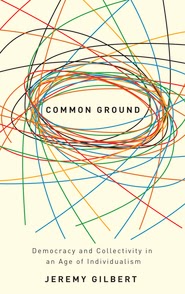
Commonalities: On Gilbert's Common Ground
Full disclosure: I met Jeremy Gilbert at a Deleuze
conference in Wales in the summer of 2008. He gave an interesting paper on
Deleuze, Guattari, and Gramsci and I ended up talking to him at pub. The
conversation was one of shared interests that went beyond Deleuze, it was a
Deleuze conference after all, to include Simondon, transindividuality, and the
broader problem of reimagining collectivity in individualistic (and
individuated) times. As anyone in academia knows, the experience of meeting
someone with shared interest is often ambivalent. There is the joy of finding
someone to talk to, of feeling less alone in the wilds of academia, coupled
with the sadness of feeling less original, less insightful. The latter feeling
is of course intensified by a publishing culture that is predicated less on
collective projects and more on developing a highly individuated name for
oneself. In the years since then, as our projects progressed (his made it toprint first) we joked about constituting a new school of thought,
Transindividual Ontology and Politics (TOP)?
Wednesday, January 01, 2014
What Does the University Say? On Macherey's La Parole Universitaire
The fundamental structure of Macherey’s book on the university is familiar to readers of his recent publications on “everyday life” and utopia, as well as anyone who has followed his website “Philosophe au sense large.” As with those works (and courses) a central idea or problem, in this case the idea of the university, is subject to a broad thematic investigation that encompasses philosophy (Kant, Hegel, Heidegger), sociology and psychoanalysis (Bourdieu and Lacan), and literature (Rabelais, Hardy, Nabokov). This is “philosophy in the largest” sense, to borrow the name of Macherey’s course; the different registers and disciplines and knowledge problematize and negate each other as much as they expand upon the central topic.
Tuesday, December 24, 2013
The Present as Conspiracy: Vaughn and Martin's The Private Eye
Brian Vaughn and Marcos Martin's The Private Eye is a web only comic that has a critical view of the internet. Set in the not too distant future, in the year 2076, it takes place in a time in which values regarding privacy and anonymity have been completely transformed, or "revalorized"--to use Nietzsche's terminology. Privacy is held as a sacred right, so much so that everyone has a secret identity, or several, and masks to wear when they go out in public. A generalized secret identity might seem like a critical take on the conventions of the superhero comic, but Vaughn and Martin's critical target is less the conventions of their medium than those of our world.
Sunday, December 15, 2013
Personalized Ideology (or Ideology Personified): Silva's Mood Economy
Do not demand of politics that it restore the “rights” of the individual, as philosophy has defined them. The individual is the product of power. What is needed is to “de-individualize’ by means of multiplication and displacement, diverse combinations. The group must not be the organic bond uniting hierarchized individuals, but a constant generation of de-individualization. Michel Foucault, Preface to Anti-Oedipus.
In the past few weeks I have returned again and again to the idea of "negative solidarity" that I outlined on this blog. I found myself mentally bookmarking news reports and articles that seem to be evidence of hostility to any collective organization for wages or benefits, not to mention larger or more structural transformations. The affect of ressentiment, the distinct sense that someone somewhere was benefiting at your expense, seemed prevalent. (Of course the "someones" in this situation are always those on social welfare programs, state employees, etc., never capitalists, investors, etc.) However, negative solidarity risked having all of the characteristics of what Althusser called a "descriptive theory," a sophisticated sounding recasting of what one already knows and thinks. The dangers of descriptive theories is that they provide a moment of recognition, ("That is it, dude; totally,")but no way to move forward. So the question which I returned to again, is how to account for the genesis and constitution of negative solidarity, how to move beyond description. This is a question of socio-political theory, but it is a necessary precondition of political action as well. Negative Solidarity is in that sense another name to the barrier of any politics whatsoever.
Friday, November 08, 2013
Economies of Affect/Affective Economies: Towards A Spinozist Critique of Political Economy
Presented at Historical Materialism London 2013
Antonio Negri argues that, “...in the postindustrial age the Spinozian critique of representation of capitalist power corresponds more to the truth than does the analysis of political economy.” Many of the contemporary turns to Spinoza in Marxist thought have followed this trajectory, turning away from the critique of political economy towards critiques of ideology or, in Negri’s case, the representation of power. This is perhaps not surprising, it is easier to make connections between Spinoza’s critique of superstition and theories of ideology than it is to connect his understanding of desires and striving to consumption and production. As much Spinoza offered a trenchant critique of the religious, monarchical, and even humanist ideologies of his time, he had little to say, at least directly, about the emerging capitalism. Money is only mentioned once in the Ethics, where it is defined as the universal object of desire that “occupies the mind of the multitude more than anything else” (EIVAPPXXVIII). While such a statement intersects with critiques of greed and the capitalist transformation of desire it remains to partial and incidental to developing a Spinozist critique of political economy.
Friday, November 01, 2013
What Would Hegel Do? Preliminary Remarks on the Problem of Action in the Phenomenology of Spirit
If one dispenses with all of the various reified and received ideas that frame almost any reading of Hegel's Phenomenology of Spirit then it is perhaps possible to see to what extent the idea of action repeats throughout the text as something of a refrain.
Thursday, October 24, 2013
The Production of Belief: From James to Lazzarato (and Back Again)
My approach to William James is necessarily oblique and eccentric. I am not a scholar of James or Pragmatism. My entire approach to James’ The Will to Believe is framed by a reference to it in the work of the post-autonomous thinker Maurizio Lazzarato. While such an approach is perhaps outside of the of James’ scholarship, the emphasis of on the shifting context as different philosophers and different historical moments is perhaps faithful to the spirit if not the letter of James’ writing. From this perspective philosophy is less a Kampfplatz, a particular battlefield between different positions, than a hall of mirrors in which the perspectives shift and change as time progresses.
Sunday, October 13, 2013
The Community of Those Who Cannot be Affected: On Lordon's La Société Des Affects
Frédéric Lordon's La Société des Affects: Pour un Structuralism des Passions is comprised of a series of essays which develop and expand upon his "energetic structuralism," his synthesis of regulation theory, Marx, and Spinoza developed in such works as Capitalisme, Désir, et Servitude: Marx et Spinoza. It is also a book that continues Lordon's interest in the intersection of philosophy and the social sciences, specifically Spinoza and political economy.
Friday, October 04, 2013
"The Only Thing That We Have In Common Is The Illusion of Being Together"*: Connecting with Don Jon
Joseph Gordon Levitt's first film, Don Jon is a surprisingly perplexing film. On the one hand it is one of the first mainstream films in the US to deal with internet porn, but, at the same time, it is not about porn, or even an addiction to porn. Its aspiration is use pornography as an allegory for something, but for what?
Sunday, September 29, 2013
"Look on my works, ye mighty, and despair!": Breaking Bad as Austerity Allegory
What follows should perhaps have the subtitle "Scattered Speculations on Breaking Bad" because it started as a post a few episodes into the final run and was finished after the penultimate episode. Edits were made along the way, but it is less a coherent essay taking into consideration the entire narrative arc of the last season than it is a series of observations as it unfolds. It is a bit long, and, if you have not seen the last season, spoiler alert.
Wednesday, September 11, 2013
Brutality Today: Brief Remark on Chamayou's Manhunts
When I first heard of the publication of the book, Manhunts: A Philosophical History it immediately occurred to me that it was the kind of book I would want to read. I have a well known obsession with The Most Dangerous Game and its various remakes. In fact if you place me in a room with at least two hunting trophies I will immediately start doing my impression of the rich bored hunter, claiming that "Man truly is the most dangerous game." So I knew that I would find the book interesting. What I could not initially understand is what the book would offer besides some rather dark trivia of man's inhumanity to man.
Sunday, September 08, 2013
Geeks Versus Hipsters: Scattered Speculations on the Affective Economy of Popular Culture
Image from The Private Eye by Brian K. Vaughn and Marcos Martin
There are two basic models of affective orientation towards popular culture. The first is the nerd, or more properly, the geek. I prefer the latter term because it shifts the focus away from content, comic books, sci-fi, etc, and towards the relationship of intense identification and pleasure; a relationship often summed up by the phrase "geek out."Framed in such a way the geek contrast nicely with the hipster, the latter is defined less by content, beards, bands from Brooklyn, etc., than by an affective relation of either irony or detachment. The hipster would not be caught dead wearing the band of the shirt that he is going to see, while the geek shows up at the convention in full costume of her favorite character.
Saturday, August 17, 2013
How Not to do Dystopia in a Dystopia: A Brief remark on Elysium
In an instance of "first time as protest, second time as product" Elysium has been described as a movie of the 99%, a film that expresses the same sentiments as Occupy Wall Street. I think that this is accurate, but not in the way it is meant. What Elysium expresses is not some radical message in the trojan horse of a late summer blockbuster, even less some kind of Marxism, but the limits of the populist imaginary of the Occupy moment.
Sunday, August 11, 2013
Negative Solidarity: Towards the Definition of a Concept
Even though it is not a recent post, I was struck by this post on "negative solidarity" on the blog splintering bone ashes. To cite from the blog:
Wednesday, June 12, 2013
Please Stand By: Or, Print Killed the Blogosphere Star
Dear friends, readers, and people who ended up here by poorly formulated search terms:
In order to complete a long overdue book project I will put my blog on hold for at least the remainder of the summer. As much as I would love to offer reviews of summer blockbusters, the various books that I have read, and weigh in on current economic and political crises, all to the delight of dozens, I have to focus my writing energy and time on the book. So, for the summer I am eschewing the digital and its short term gratifications for print and its long term frustrations. My tentative schedule is to return at the end of Breaking Bad, because I really cannot resist writing about that. Thanks for reading. In case you are curious, I have posted a somewhat dated version of the prospectus of the book, which I am completing for Historical Materialism, below.
Wednesday, May 22, 2013
We are all Neoliberals: Dardot and Laval's La Nouvelle Raison du Monde
Neoliberalism has become an increasingly popular word in contemporary critical thought and philosophy. Its popularity has come at a cost, however, as the meaning of the word has been reduced to a few vague inclinations about the truly bad kind of capitalism held together by invocations of competition, markets, and individualism. It has become what Althusser called a descriptive theory at best, and, at worse, a way to speak about capitalism without speaking about capitalism. In the worse case it became the name for a kind of nostalgia for an earlier kinder and gentler capitalism, one that we could get back to as soon as the full impact of the recession was felt and people started really paying attention to Paul Krugman.
Sunday, May 05, 2013
Untenable Subtexts: Iron Man Three
Having written something about the first two Iron Man films on this blog in the past I felt obligated to write at least something about the third. My thoughts on this film are framed by Hassler Forest's assertion that the superhero film is a post 9/11 cultural form; the genre not only emerges after that historical event but it provides sufficient fantasy difference to confront both historical trauma and to legitimate the emerging national security state. It makes large scale destruction, often of New York, palatable and, more importantly, it makes generalized surveillance and extra-judicial forms of enforcement not only acceptable, but cool.
Tuesday, April 30, 2013
Figures of the Common: Species Being, Transindividuality, Virtual Action
Paper was originally presented at the Futures of the Common conference at the University of Minnesota in 2009. Some of this has been taken up into my current work, and some of it has been abandoned. I am posting it here for the gnawing criticism of digital mice.
The common has become a central term for political action and philosophical reflection. At first glance this would seem paradoxical; after all, Marx argued that capitalism confronts us as immense accumulation of commodities, as a situation in which all that exists, exists as a commodity, as private property. The attention to the common would then seem to be the worst sort of nostalgia, a lost Eden before the fall of primitive accumulation. Proponents of the concept, however, argue that the term does not just shed light on the origins of the capitalism, on the destruction of the agrarian commons that constituted the necessary condition for the emergence of labor power, but reveals its current function, as capital appropriates not just the commons in terms of land and resources, but the common, understood as the collectively produced and circulated knowledges, habits, affects, and concepts that produce our cultural life.[1] It is worth noting, however, that this distinction between past and present, material commons and the immaterial common, is not that rigid.
Sunday, April 07, 2013
Contradictions at Work: The Task for a Philosophy of Labor (with Hegel, Marx, and Spinoza)
Draft of Paper Presented at University of Memphis
The current economic crisis has returned the economy to the center of politics. The economy no longer functions as the silent backdrop of political contestations over rights and responsibilities, but has itself been politicized, at least in terms of rhetoric. Central to this new rhetoric of politics is the status of work, albeit in an ambiguous and contradictory manner. Occupy Wall Street, and the various occupations around the globe, framed the question of work, to the extent that they addressed in, in terms of a divide between Main Street and Wall Street, a divide between those who work, producing goods or at least services, that could be useful and beneficial to society, and those who only exploit this labor, whose elaborate and complex formulas for generating debt, and thus have no productive value or worth in society. It is a division between productive labor and unproductive labor, workers and parasites. This division is mirrored, which is to say reflected and inverted, in the rhetoric surrounding various government programs for austerity, cutting social services and programs, which are almost always framed in terms of “putting people to work” of ending the “entitlements” which have coddled the retired, disabled, or lazy, allowing them to parasitically live off of the hard work of others. We are no longer haunted by the spectre of communism, but by the spectre of the free-loader, but the identity of this free-loader is shifts across the political spectrum. Work is thus the basis for a left populism or right populism, in each case “work” represents the people, the masses, the majority, whose interest and efforts need to be defended against a parasitic minority of either venture capitalists or state employees, the unemployed, and retired. Between this war of competing populisms there is the social and technological transformation of work, the growing realization that the jobs, especially those that sustained the idea of a “middle class” jobs that provided a degree of comfort, security and stability, might be gone for good, replaced by some combination of technology and outsourcing. (When the New York Times columnist Ross Douthat imagines a world without work things have gotten very weird). Work is placed at the center of political life, defining the people, and the exact moment when its technological and political conditions are radically changing.
Friday, March 29, 2013
We Other Cannibals: Viveiros de Castro and Deleuze and Guattari
I have always been more on Team Anti-Oedipus than Team A Thousand Plateaus. Partly this is autobiographical. I read Anti-Oedipus at a very impressionable time, too soon--in undergrad. I picked the book at City Lights in San Francisco partly because Hampshire Professor Margaret Cerullo had a blurb on the back. (This was the old Minnesota copy with the cover designed by Harold and the Purple Crayon.) At the time I was trying to navigate the world of "theory," designing my own major which combined anthropology and philosophy. I was positioned to understand less than a quarter of it, but the rest I thoroughly enjoyed. I stayed up all night on a red eye reading it. The other reason that I have continued to gravitate towards Anti-Oedipus, writing on it and teaching it, is that I felt that I could do more with it, plug it into my various conceptual machines, producing readings of primitive accumulation and Marx's ontology. In contrast to this A Thousand Plateaus seems to descend down so many rabbit holes that I cannot follow. I just don't know enough about birdsong and geology (another reason that I will never be a speculative realist, I suppose).
Tuesday, March 12, 2013
A Brief Encounter: Between Analysis and Affect
I was introduced to David Lean's A Brief Encounter by Slavoj Zizek and Sophie Fiennes A Pervert's Guide to Ideology. The film is about a married doctor and a woman (also married) who meet in a train station and fall in love. The film documents their brief affair against a stifling atmosphere of propriety in Post-World War Two England.
Monday, February 18, 2013
Hitchcock in the Age of Psychopharmacology and Finance: On Side Effects
Steven Soderbergh is a somewhat mercurial director. He more or less started "independent film" with Sex, Lies, and Videotape in 1989, but then went on to spend subsequent decades making everything from Julia Robert's star vehicles to a two part epic about Che Guevara. Soderbergh seemed to be at times deliberately avoiding the trappings of the auteur to cultivate the idea of a jack of all trades that shifted from the bloated star vehicles of Ocean's Eleven to the intentional obscurity of Bubble, adapting everything from Elmore Leonard to Franz Kafka in between.
Sunday, February 10, 2013
Deviant Gesture Catalog: Between Mechanization and Spectacle
Lately I have been interested in the question of gesture. This interest is framed by two different lines of inquiry. The first, and dominant, one is in the transindividual dimension of gestures, or, perhaps gesture as a way of both illustrating and examining transindividuality. While gesture is not specifically named by Gilbert Simondon, the dominant theorist of transindividuality, there is a great deal of interest in it by Paolo Virno, Bernard Stiegler, Yves Citton--although only the last specifically names it as such. The general problem is the same, however, gestures, habits, and comportments are both the constitution of collectives and individuals. Gestures mark one's historical moment, one's class, nation, and other groupings, but also define and delimite a singular way of inhabiting the world.
Tuesday, February 05, 2013
The Imaginary Institution of Realpolitik: Or, When Theory Becomes Practice
Hegel wrote that all events in history occur twice, he forgot to add: the first time as theory, the second as reality. This is of course not the famous passage from Marx, but it did occur to me in thinking about contemporary politics. For decades, at least throughout the eighties and nineties, there was a great deal of attention paid to "the imaginary." This imaginary was approached from multiple angles, with multiple theoretical sources, Lacan, Spinoza, Castoriadis, and qualified alternately as social, political, and historical. However, this work, the work on the politics of the imaginary was left to comparative literature departments and continental philosophers. Real politics, it was claimed, were always elsewhere, where competing interests and perspectives debated.
Tuesday, January 15, 2013
Captain Contingent Versus Doctor Necessity: The Rise of The Superhero Genre
A combination of vacation travel reading and gifts made it so I read Dan Hassler-Forest's Capitalist Superheroes: Caped Crusaders in the Neoliberal Age and Sean Howe's Marvel Comics: The Untold Story over the same few weeks. At first glance these books could not be more different. Hassler-Forest's book deals with the superhero film viewed from the perspective of the political and cultural transformations of the post 9/11 era. In sharp contrast this treatment, Howe's book is a kind of "inside baseball" look at the history of Marvel Comics. Hassler-Forest's book is an entry in Zero Books catalogue, which seems destined to single-handedly rescue cultural analysis from the excesses of cultural studies and the dismal "philosophy and [blank]" series at Open Court. Sean Howe is an entertainment journalist of a more traditional variety, albeit one whose "Deep Focus" series on films also tries to traverse the no man's land between the popular and the scholarly. Despite these differences of perspective and approach, the two very different books converge on a singular object of inquiry, that of a dominant cultural form, the superhero comic and film.
Sunday, January 06, 2013
What Remains of an Emancipation: Lincoln and Django Unchained
If the predictions of the handicappers and insiders are correct, then 2012 will prove to be a strange year at the Oscars. It will include two films that deal with slavery. This breaks not only a long trend which has kept slavery out of American cinema, at least in the post-civil rights era, but with the general trend of comfortable distance that defines the pictures that win awards, films of safely bygone atrocities with heroes one can "identify with." Slavery featured more prominently in the age of apology and justification, forming the basis for the two canonical films, Birth of a Nation and Gone With the Wind, than it has in the decades in which racial hierarchy has been openly contested.
Tuesday, December 18, 2012
Politics of Transindividuality: Some Preliminary Remarks on Citton's Renverser l'insoutenable
The revival of interest in Simondon's term transindividuality to thematize social relations has raised the question of what a politics of transindividuality would mean, or what the very concept of transindividuality offers for politics. As Alberto Toscano argues, this question has as its basis the lack of any real political dimension to Simondon's thought. Despite this lack, or maybe because of it, much of the contemporary revival of Simondon in such thinkers as Stiegler, Virno, Balibar, and Citton, is political, or social-political in orientation. That last qualification is important, because it is my contention that what is at stake in Simondon's concept of transindividuality is not just a rethinking of "the political" (do we really need another?) but a rethinking of the relation between politics and economy.
Monday, December 03, 2012
Insiders and Outsiders: Season Three of Treme
Season Three of Treme is perhaps the season in which the show final came into its own, developing its own particular narrative structure. Sadly it will also be the last full season of the show. Comparisons with The Wire are still unavoidable, but at least at this point they suggest a real difference--a different idea--and not just the relation of lauded original to failed copy. David Simon initially suggested that the difference between these shows was one of positive and negative. As Simon states, Treme is in part an argument for the city.
Saturday, November 24, 2012
Towards a Spinozist Critique of Political Economy
The encounter between Marx and Spinoza that ran through late twentieth century Marxist thought was primarily organized around three axes. The first, or at least most well known, is Althusser's use of Spinoza's critique of teleology, anthropomorphism, and anthropocentricism to develop the matrix of every possible theory of ideology, effectively shifting ideology from a critique of this or that content of thought to its fundamental orientation, The second, at least in terms of notoriety, is Negri's expansion of living labor into constitutive power through Spinoza's concept of the conatus. Spinoza makes it possible to see the productive labor underlying every institution and imaginary representation, becoming adequate to the age of real subsumption. A third direction could be represented by Alexandre Matheron who develops both a Spinozist account of social relations, a transindividuality avant la lettre, and an expanded definition of alienation. This set of labels is admittedly reductive, but it has the sole merit of underscoring the fact that much of the Marxist engagement with Spinoza has been on the terrain of politics or ideology rather than economy.
Friday, November 02, 2012
Negative Prefiguration: Flexibility, Capitalism, Imagination
During my last few years of High School I worked at coffee shop, part time during the school year and full time during the summers. This job continued through the first few summers of college. My shifts were eight hours, from either six in the morning or three in the afternoon, with two fifteen minute breaks, and a half-hour lunch break. These shifts had the usual peaks and lulls that defined the food industry, mornings would begin with a rush of office workers ordering coffee and bran muffins and evenings would begin with people ordering coffee and desert before dissipating into a crowd of those too young to frequent bars as well as the late night writers, scribblers, and mumblers.
Saturday, October 27, 2012
Screening Responsibility: On Compliance
If you have heard about Compliance, you have probably heard one or more of three things about it, that it is based on a true story, that it covers the same issues of authority and obedience that were explored in the famous Milgram experiments, and that the film provoked people to walk out of its Sundance premiere. These three facts triangulate in particular ways, and some might argue that the first two explain, or ameliorate, the third. This is especially true of the claim “Based on True Events," which flashes in bold letters during the opening credits. Veracity functions as an alibi. Horrible things can be shown because they are true.
Monday, October 08, 2012
Our Nature is to Change Our Nature: Bertrand Ogilvie and Political Anthropology
"Nature and education are somewhat similar. The latter transforms man, and in so doing creates a second nature." Democritus
The idea of “second nature” is one of the longest standing philosophemes in the history of philosophy. Its origin can be traced to Democritus’ writing on education and habit and from that point onward it appears quite frequently in the history of philosophy, reappearing in the a long history of thinkers that includes Aristotle, Pascal, and Hegel. Given that the theme often asserts both a default, a lack of instinctual determination, and an excess, the possibility of constituting memory and habits, it is possible to argue that “second nature” is the concept of the human underlying any humanism. As longstanding as the concept is, however, it often functions as that which is implicit in a discussion of habit or memory, rather than an explicit theme. The philosopheme names and enacts a relation between excess and default. Bertrand Ogilvie has broken this trend, placing the concept front and center in his new book, La Second Nature du Politique: essai d’anthropologie négative.
Sunday, September 30, 2012
After the Future(s): On Looper
"The tradition of all dead generations weighs like a nightmare on the brains of the living. And just as they seem to be occupied with revolutionizing themselves and things, creating something that did not exist before, precisely in such epochs of revolutionary crisis they anxiously conjure up the spirits of the past to their service, borrowing from them names, battle slogans, and costumes in order to present this new scene in world history in time-honored disguise and borrowed language."--Karl Marx
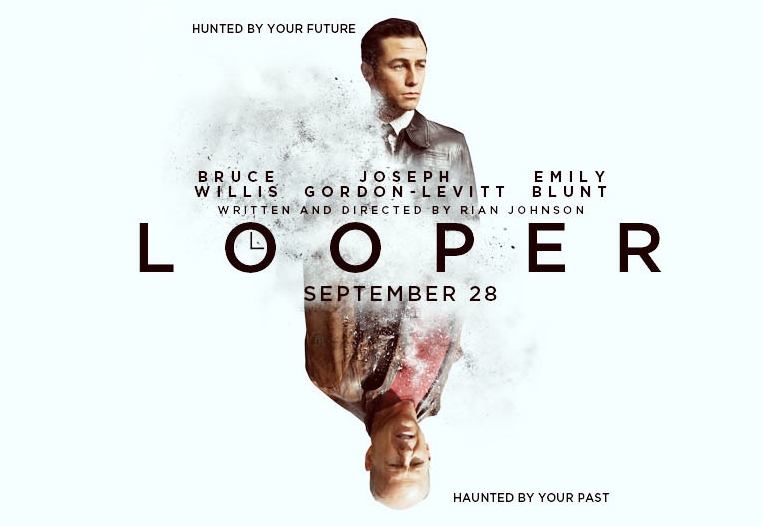
"Time travel has not yet been invented. But thirty years from now, it will have been," is the opening narration that sets up Rian Johnson's Looper. The movie is set in 2044, a time before the invention of time travel but after its effects. It is a movie with two futures, neither particularly good. Time travel, it appears, was no sooner invented than it was outlawed. It is only used by criminal syndicates some thirty years in the (second) future, where it is apparently easier to send a man back in time than it is dispose of a body.
Sunday, September 16, 2012
"Be More Productive": Marx, Foucault, Macherey
Crappy image of a Foucault Loves Marx T-Shirt
"La nécessité dans la liberté : c’est la grande invention du capitalisme." Pierre Macherey
The good folks at Viewpoint have published a (new) translation of Michel Foucault's "Les Mailles du Pouvoir." This was originally a lecture that Foucault gave in Salvador, Brazil. It was published in Dits et Écrits, but was not included in the truncated Essential Works of Michel Foucault, a collection which is less an abridged version of the comprehensive French collection than it is a repackaging of Foucault's already published works. Unfortunately, "Essential" is less a descriptive term than it is a performative one, and this collection will probably be the official word on Foucault's writing. Which is too bad, the "Mesh of Power" (to use the name of the translation) is one of those texts that, to borrow a phrase from Foucault, would have saved many of us a lot of time. By "us" I mean those that were interested in the relation between Marx and Foucault.
Friday, September 07, 2012
The Previous Post Continued: Parting Thoughts on Breaking Bad's Fifth Season
In Book Two of the Politics Aristotle famously criticizes those who pursue wealth without limit, those who fail to understand that wealth acquisition should be subordinated to household management. Much of the discussion on this passage focuses on the distinction between "proper" and "improper" use as precursors of use value and exchange value. The proper use of a shoe being wearing it and the improper use being its exchange. Those who pursue wealth, who endlessly accumulate, forget that the proper use of money is a means of exchange, not accumulation.
Saturday, August 18, 2012
Be Your Own Boss: Breaking Bad and the Entrepreneur
The arc of Breaking Bad has been described by its creator, Vince Gilligan as going from "Mr. Chips to Scarface" as Walter White, the show's central character, makes the transition from high school chemistry teacher to drug kingpin. This probably best describes the show in a nutshell, and I would say that even at that the level the show is fairly innovative. Repetition defines television, and crafting a show in which the protagonist becomes a villain is a provocative experiment, flying in the face of conventional wisdom which sees any deviation from a show's initial premise as "jumping the shark." However, I think that show becomes even more interesting if you scratch beneath the surface, and see how much it has to do with work and the ideal of liberating oneself from work through the fantasy of being an entrepreneur.
Wednesday, August 01, 2012
Is it Simple to be a Philosopher in Marxism?
In nineteen seventy-five Louis Althusser presented one of his
best, and underrated essays, titled “Est-il simple d’étre marxiste en
philosophie?” Intended as part of his Doctorat d’ État, and thus functioning as
a summary of much of his writing up until that date, the essay outlined the conflict between the demands of philosophy and Marxism.
Sunday, July 22, 2012
Endless Mutation: Reboots and Sequels
All illustrations of this post from 4 Color Process.
This review begins with a thesis, which is not a
hypothesis since it is not my intent to test it but to apply it. The theses is
as follows: cinematic reboots are the screening of the relation between the
forces and relations of production. At the level of forces there is the
ceaselessly revolutionizing technology of special effects, which date
everything instantly, justifying a new reboot every few years. However, this technological upgrade can only be successful, can only become a film, if it manages to capture some shift in the political and cultural climate, therelations of production.
Thursday, July 12, 2012
Strong Interpretation: Citton’s L’Avenir des Humanités
It is perhaps a matter of common knowledge that the
humanities, philosophy, literature, classics, art history, as well as history
and the “soft” social sciences, are under attack. This attack is generally
framed in terms of the general logic of austerity, which views the idea of any
education that is not directly and immediately job preparation, as something
which we as a society could afford once but can afford no more. The humanities
are seen as luxuries of more opulent times, a claim that may surprise anyone who
has actually worked in the humanities. Against this brutal logic of austerity,
which also views retirement benefits and dental plans as “luxuries,” there have
attempts to defend the humanities. These defenses generally take two forms:
some accept the premise that argues that higher education is job preparation,
arguing for the marketable nature of the core skills of the humanities, such as critical reading,
writing, and thinking; while a second set of arguments rejects the premise of
marketability, arguing instead that higher education has lofty goals than just
preparing workers. Critical reading and writing train political subjects, the
citizens rather than employees of tomorrow.
Subscribe to:
Posts (Atom)